Hyundai Alcazar vs
Mahindra XUV700
The Alcazar wraps you in premium comfort; the XUV700 gives you genuine seven-seat space and power.
Most buyers decide here. Read this before anything else.
- You are a family of four or five who wants the third row for occasional guests, not a daily commute.
- You prioritise a plush, hotel-lobby cabin over outright space, and the tan-and-navy interior genuinely excites you.
- You do mostly city driving with weekend highway runs and want a DCT that handles stop-go traffic without drama.
- You are upgrading from a Creta and want the next step up in badge and features without jumping to a much larger footprint.
- You value ventilated captain chairs in the second row above almost everything else on your list.
- You want a car that feels boutique and refined rather than muscular and commanding on the road.
- You regularly seat seven adults and need the third row to function as a proper seat on a 300-kilometre family trip.
- You want a diesel automatic with AWD because your annual plan includes a Ladakh or Spiti drive.
- You are a performance-minded buyer who wants 200 hp and 380 Nm available on a mountain overtake without downshifting twice.
- You are value-conscious and want the most powertrain options, from an entry diesel manual to a fully loaded AWD automatic, across a wide price band.
- You live outside a metro and want proven long-term reliability and a wide Mahindra service network.
- You carry a lot of luggage with seven passengers and need the boot to actually exist after folding nothing.
The Alcazar scores 7.0/10, the XUV700 8.1/10. In real life, they are built for different people.
The XUV700's mHawk diesel automatic delivers wide torque from low revs, making 400-kilometre runs relaxed and fuel-efficient. The Alcazar's turbo-petrol DCT is smooth and eager, but Arun Panwar's notes confirm it works harder at sustained highway speeds and returns noticeably lower economy. For quarterly road trips with luggage and seven people, the XUV700 is the more capable tool.
The Alcazar's second-row captain chairs with retractable tray tables, individual armrests and ventilation make the school run feel genuinely premium. The XUV700's second row is comfortable but bench-oriented at lower trims. MotorOctane's multi-car comparison confirms the Alcazar's interior finish impresses most at close quarters and slow speeds where refinement matters.
The XUV700 diesel automatic with AWD is one of very few cars in this segment to offer this combination, making it the clear choice for buyers who plan genuine terrain driving. The Alcazar is front-wheel drive only across all variants. Both sit at 200 mm ground clearance, but without a rear-axle drive option, the Alcazar stays a blacktop car.
Hyundai's resale values are consistently strong in India, and the Alcazar benefits from the brand's deep service network and well-understood DCT maintenance costs. The XUV700 has built a solid reliability track record since 2021 and Mahindra's service reach outside metros is excellent. Faisal Khan notes that the XUV700's value proposition across its wide price band makes it hard to fault on cost-of-ownership grounds. This one is too close to call.
Scores shown inline. "Best for" tells you who each result matters to.
| Axis | Hyundai Alcazar | Mahindra XUV700 | Best for |
|---|---|---|---|
Design |
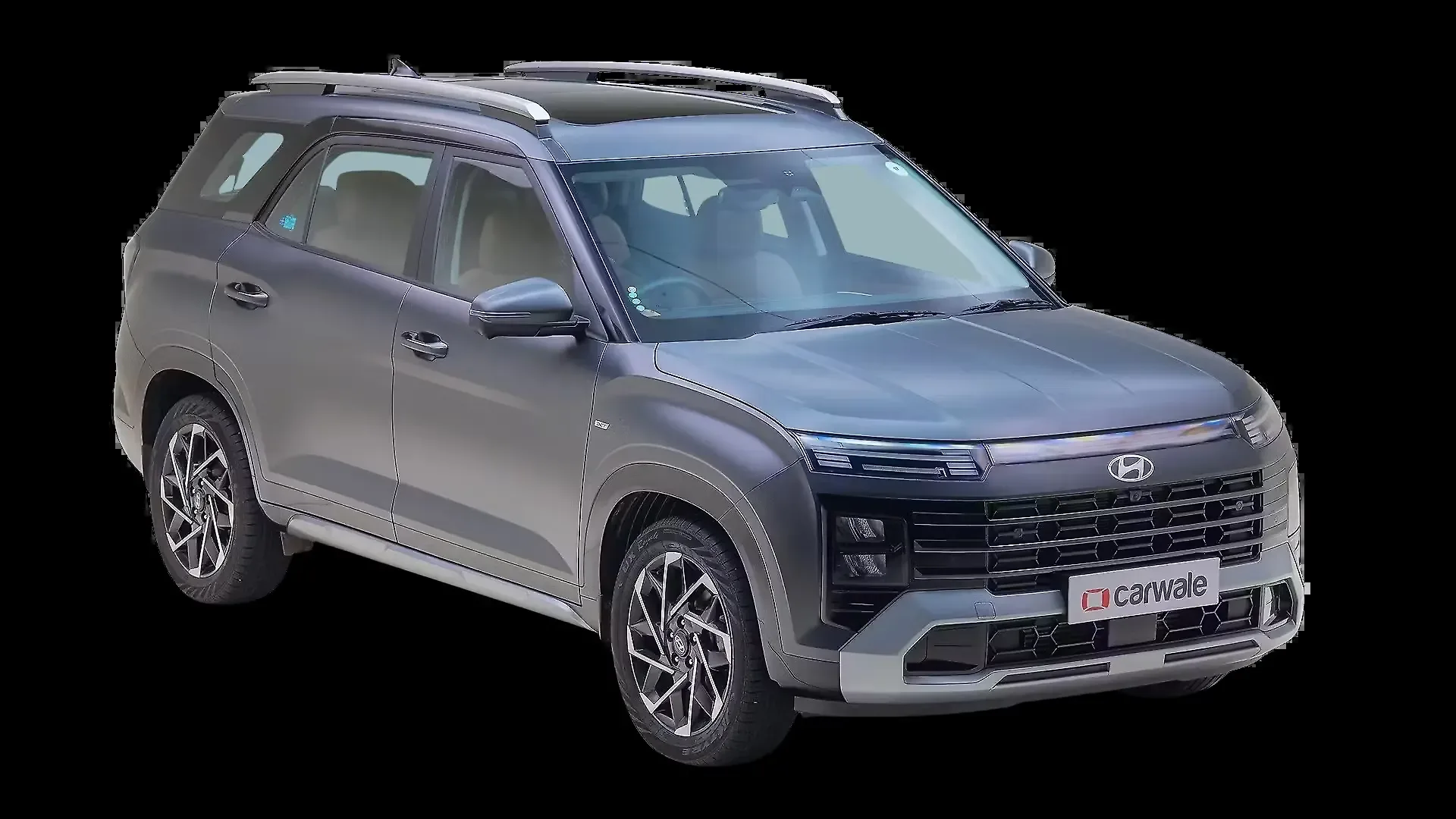
The 2025 Alcazar finally reads as its own car. Split-LED headlamps, H-shaped DRLs, sequential indicators and connected tail lamps give it real kerb presence at 4.5 metres. MotorOctane's headlight test found the Alcazar's throw acceptable but noted the XUV700 edges it on intensity and automatic high-beam boosting above 80 kmph. 7.5 / 10 |
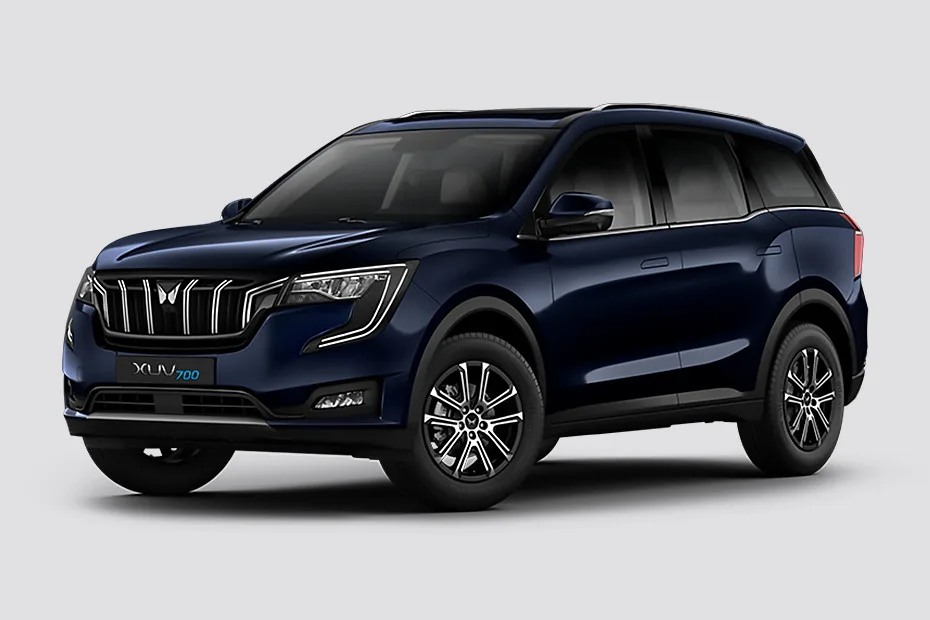
The XUV700 gains Napoli Black and dual-tone roof options for 2025 but the silhouette is unchanged at 4.7 metres. Faisal Khan acknowledges that the Tata Safari's recent update has pulled ahead on freshness, making the XUV700's exterior feel evolutionary rather than striking. It is large and planted but no longer the boldest design in the segment. 7.5 / 10 |
Style-forward urban buyersAlcazar's new face reads more contemporary and distinctive at this size
|
Interior |
The dual-tone tan-and-navy cabin, quilted leatherette, soft-touch upper dash and twin 10.25-inch screens make the Alcazar feel every rupee of its 20-lakh-plus price. The ventilated captain seats with adjustable thigh support and tray tables are the headline feature. Third-row space is genuinely tight and best suited to children. 8.0 / 10 |
The XUV700's Mercedes-inspired twin-screen layout is now joined by a passenger-side display on top trims. Gagan Choudhary points out that the bronze, tan and dark grey dashboard combinations look slightly busy. Seven airbags and memory driver seat are strong marks, but material quality varies across trim levels and the cabin does not feel as cohesive as the Alcazar's. 7.5 / 10 |
Families prioritising ambienceAlcazar's cabin feels more deliberately designed and consistently premium
|
Performance |
The 1.5-litre turbo-petrol produces 160 PS and 253 Nm. Arun Panwar confirms the engine pulls cleanly from 1500 rpm and the 7-speed DCT dispatches overtakes effortlessly. Sport mode adds genuine character. The diesel option at 116 PS suits fuel-economy buyers but feels pedestrian against the XUV700's powertrain range. 7.5 / 10 |
The 2.0-litre mStallion petrol delivers 200 hp and 380 Nm, and the 2.2-litre mHawk diesel comes in 155 hp and 185 hp tunes with AWD available. The petrol is immediately exciting and the diesel's torque makes light work of loaded highway drives. Five powertrain combinations mean almost every buyer profile is covered, which no rival in this segment can match. 8.0 / 10 |
Performance and versatility seekersXUV700 offers more power, more torque and the only AWD diesel automatic here
|
Ride Quality |
The Alcazar's longer wheelbase versus the Creta does help highway composure, but multiple reviewers flag a stiff low-speed ride over broken surfaces and speed bumps. At city crawl, the suspension thuds are noticeable. Highway cruising is smooth and composed, which suits buyers who primarily use expressways. 7.0 / 10 |
The 2025 XUV700 arrives with updated suspension tuning and the improvement is tangible. MotoWagon's highway run confirms the ride is planted and absorbent at speed, and urban potholes are handled with more compliance than before. It is one of the better-riding three-row SUVs in the segment across both city and highway use. 8.0 / 10 |
Mixed-road daily driversXUV700's updated suspension is more forgiving across varied Indian road conditions
|
Build Quality |
Hyundai's build consistency is well established and the Alcazar benefits from tight panel gaps and solid door shuts. The premium materials in the upper cabin reinforce the sense of a well-assembled product. V3Cars rates the overall build execution positively, noting it punches above its price point in perceived solidity. 7.5 / 10 |
The XUV700's structural rigidity has been a talking point since launch and the 2025 model maintains that solidity. Namaste Car confirms the body feels genuinely substantial, consistent with Mahindra's truck-derived engineering roots. Both cars are well-built; neither gives cause for concern on this axis. 7.5 / 10 |
All buyers equallyBoth cars deliver solid, confidence-inspiring build at their respective price points
|
Value for Money |
The Alcazar is priced at the upper end of its segment and the feature list justifies much of that premium. However, the cramped third row means buyers paying for a seven-seater get a car that functions best as a six-seater. Gagan Choudhary's assessment suggests the Alcazar's value peaks in the mid-spec captain-seat variant. 7.5 / 10 |
The XUV700 spans 16 to 33 lakh on-road, giving buyers entry points that genuinely undercut the Alcazar while offering more space and more powertrain choice. The AWD diesel automatic at the top end remains a near-unique offering in the segment. Namaste Car calls it one of the strongest value propositions in Indian three-row SUVs, and it is hard to argue. 8.0 / 10 |
Budget-conscious seven-seat buyersXUV700's wider price band and stronger powertrain offer deliver more at each rupee spent
|
Practicality |
The captain-chair configuration limits the Alcazar to six seats in the most desirable trim. Boot space with all rows up is minimal, and the third row is best treated as emergency seating for adults. The 200 mm ground clearance is adequate for occasional rough roads but front-wheel drive only limits its reach. |
At 4.7 metres, the XUV700 offers a properly usable third row for adults on shorter journeys and a more realistic boot behind it. The front-facing third row, wider body and AWD option on diesel automatic make it the more practical choice for larger families with varied use cases. MotorOctane's multi-car test confirms the XUV700 leads this segment on usable seven-seat space. |
Families using all seven seatsXUV700's size and layout make it the only real seven-seater of the two
|
The Alcazar scores 7.0/10 and the XUV700 8.1/10, from 8 independent creators. The overall number is only part of the story here: the dimension breakdown is where the real comparison lives.
MotorOctane: Mahindra XUV700 vs Tata Safari vs Toyota Hycross vs Hyundai Alcazar vs MG Hector Plus - Comparison