Hyundai Tucson vs
Jeep Compass
One car coddles you in tech-rich comfort; the other makes you feel the road.
Most buyers decide here. Read this before anything else.
- You drive mostly in the city and want a cabin that feels like a premium lounge, not a cockpit.
- You have a family of four and value ventilated rear seats and panoramic sunroof over off-road bragging rights.
- You log 20,000 km a year and want the diesel AWD's refinement and fuel efficiency working quietly in the background.
- You prioritise ADAS features and connected-car tech over mechanical character.
- You find the Compass's interior a touch dark and formal, and prefer Hyundai's brighter, more modern aesthetic.
- You want a car that feels genuinely global rather than regionally positioned, and the Tucson's international origins matter to you.
- You spend weekends on broken mountain roads or waterlogged trails and need a car that genuinely handles it, not just in marketing copy.
- You cover long highway stretches and want a car that feels planted and effortless at 120 km/h.
- You care about resale value and the Jeep badge's enduring desirability in the used-car market.
- You want the solidest-feeling doors and panels in the segment; shutting a Compass door tells you something a spec sheet cannot.
- You find the Tucson's tech-heavy dashboard distracting and prefer a cockpit that keeps focus on driving.
- You are buying your first proper premium SUV and want something that reads as unambiguously aspirational to everyone who sees it.
The Tucson scores 8.0/10, the Compass 7.6/10. In real life, they are built for different people.
The Compass diesel cruises at 100 km/h at just 1,600 rpm in ninth gear, making long hauls feel almost meditative. The Tucson diesel is no slouch, but its 8-speed torque converter prioritises smooth city shifting over highway-specific efficiency. MotorOctane's three-up rear-seat test confirmed the Compass holds its composure without wind intrusion better over sustained distances.
The Compass's higher ground clearance and Jeep's trail-rated DNA give it a tangible confidence on broken surfaces that the Tucson's HTRAC AWD cannot fully replicate. The Tucson AWD is competent for slippery highways and mild mud, but it is not engineered for genuine off-camber use. If your weekends involve anything beyond a muddy resort driveway, the Compass is the obvious answer.
The Tucson's more precise steering, better forward visibility, and smoother low-speed gearbox behaviour make city driving less fatiguing. The Compass feels bulky below 40 km/h and its 9-speed automatic occasionally hesitates in crawling traffic. MotorOctane noted the Compass reads as a big car the moment you enter a crowded lane.
The Jeep badge commands a loyalty premium in India's used-car market, and well-maintained Compass diesels hold value reliably. The Tucson, being a lower-volume model in India, has a thinner secondary market and can depreciate more sharply outside metro cities. Buyers who plan to upgrade in three years should factor this gap into the real cost of ownership.
Scores shown inline. "Best for" tells you who each result matters to.
| Axis | Hyundai Tucson | Jeep Compass | Best for |
|---|---|---|---|
Design |
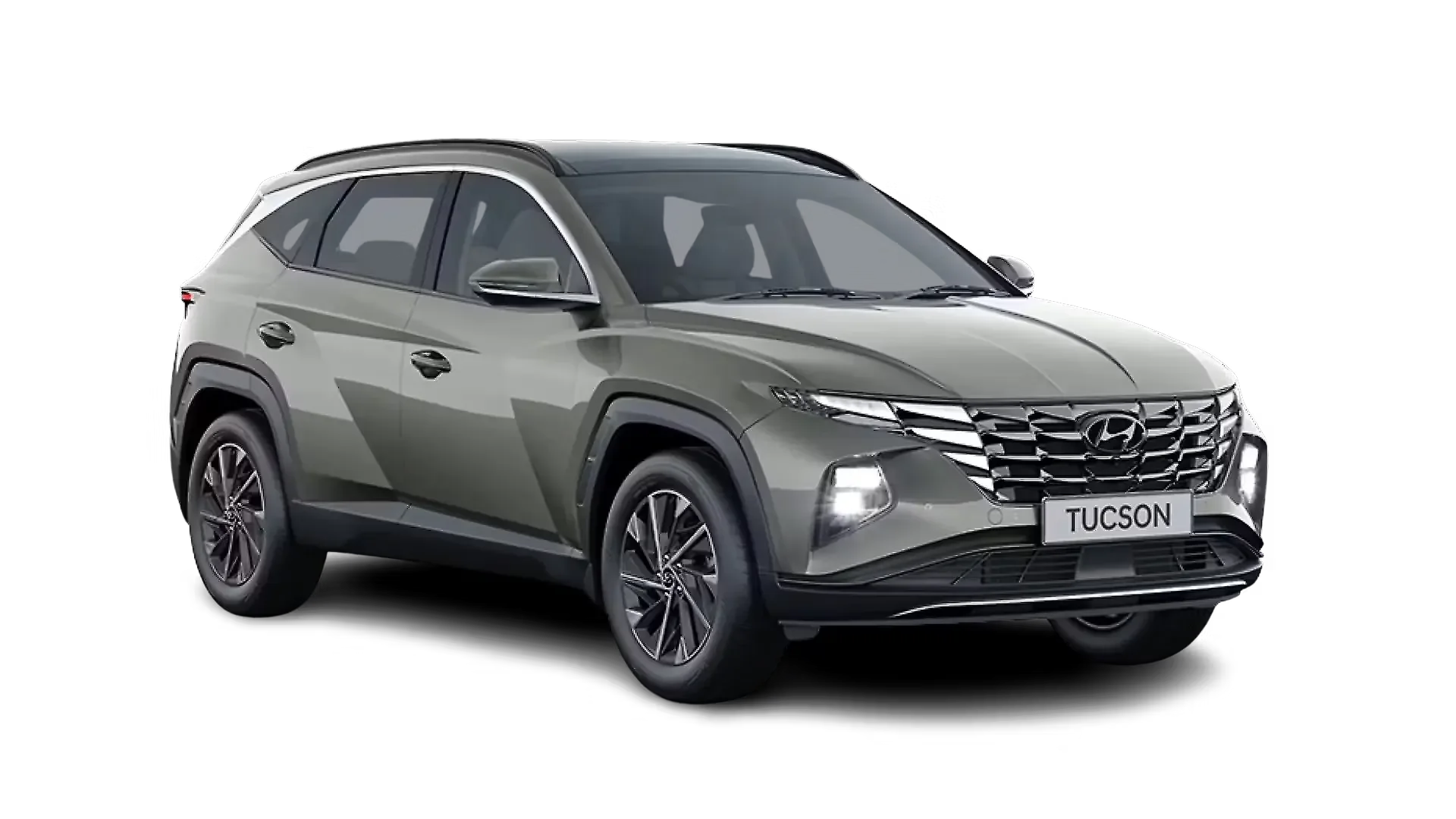
The Tucson's parametric grille hides its LED DRLs until ignition, at which point they emerge from the mesh pattern, a signature detail Faisal Khan specifically called out as still impressive in 2026. Proportions are well balanced for a long-wheelbase SUV, and the 18-inch alloys fill the arches cleanly. It looks modern and distinctly Korean without feeling anonymous. 8.0 / 10 |
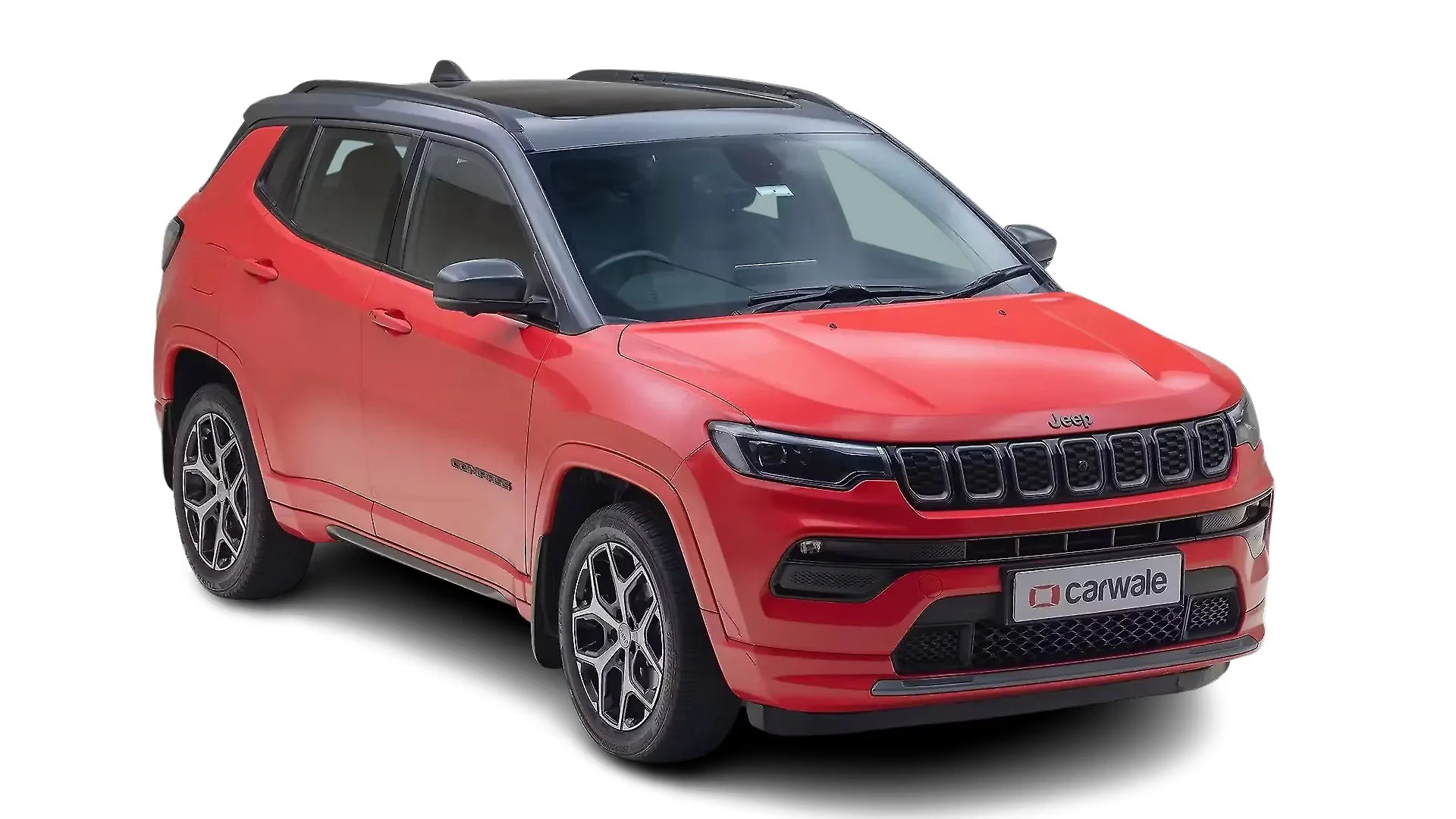
Eight years after launch, the Compass still looks unmistakably Jeep. The seven-slot grille, square arches and facelift's sharper LED headlamps give it a rugged authority that design-by-committee rivals struggle to replicate. MotorOctane noted the side cladding and roof rails lift the visual stance without making it look overdressed. 8.2 / 10 |
Buyers wanting badge identityCompass's Jeep silhouette reads stronger on the road and in parking lots
|
Interior |
Twin 10.25-inch curved displays, Genesis-grade steering feel, ventilated front seats with 10-way power adjust, and well-placed physical climate controls make the Tucson's cabin the segment's most complete package. Material quality is genuinely premium, and the dashboard layout feels considered rather than cluttered. Storage solutions, including the wireless charger and centre console gap, are well executed. 8.0 / 10 |
The Compass facelift introduced richer soft-touch surfaces, a 10.1-inch touchscreen, a 10.25-inch digital cluster and Jeep-logo-embossed speaker details that reflect real attention to finish. The cabin feels darker and more cockpit-like than the Tucson's, which suits driver-focused buyers. V3Cars rates the Compass's material feel as the segment's most consistently premium across all touchpoints. 8.0 / 10 |
Tech-first familiesTucson's curved display setup and ventilated rear seats tip the balance for four-up comfort
|
Performance |
The 2.0L CRDi diesel produces 186 hp and 416 Nm, paired to a new 8-speed torque-converter automatic. Power delivery is linear, turbo lag is well contained, and NVH suppression is genuinely impressive. The petrol, at 156 hp and 192 Nm, is adequate but uninspiring and best avoided if the diesel is within budget. 7.5 / 10 |
The 2.0L Multijet-II diesel makes 170 hp and 350 Nm, paired to a 9-speed automatic that finds its best form on the open road. It pulls hard from 1,700 rpm, feels effortless at highway speeds, and the 1.4L turbo-petrol with 163 hp covers city duties respectably via a 7-speed DCT. The Tucson holds a meaningful power and torque advantage, but the Compass's gearing suits Indian highway conditions well. 7.8 / 10 |
Power-conscious buyersTucson's diesel outputs 16 hp and 66 Nm more than the Compass diesel
|
Ride Quality |
The Tucson rides with a composure that surprises given its price point. It absorbs broken city roads without crashing into potholes, and highway stability at speed is confident. MotoWagon noted the suspension tune strikes a balanced middle ground rather than leaning hard toward either comfort or sport. 7.8 / 10 |
The Compass scores the segment's highest ride quality rating from our jury, and the reason is immediately apparent on highways. It soaks up undulations with a planted, mature feel that makes long journeys genuinely relaxing. City roads expose slightly stiffer low-speed behaviour, but the trade-off is a car that never feels nervous at triple-digit speeds. 8.3 / 10 |
Highway-heavy usersCompass's suspension tune is optimised for sustained high-speed composure
|
Build Quality |
The Tucson feels like a global product assembled with care. Panel gaps are tight, the doors shut with a satisfying thud, and interior plastics do not flex under pressure. MotorBeam rated build quality at 8.2, acknowledging it punches above the typical Korean-brand perception in India. 8.2 / 10 |
The Compass sets the segment's build quality benchmark. Shut a door and the sound alone communicates structural solidity; press any surface inside and nothing moves. Our jury awarded it 8.5 for build quality, the highest in this comparison, and MotorBeam's long-term testing reinforced that this solidity does not diminish with mileage. 8.5 / 10 |
Buyers prioritising solidityCompass's structural feel is the segment's clearest differentiator
|
Value for Money |
At ₹29-35 lakh, the Tucson asks a real stretch, but the feature count, powertrain quality and cabin finish justify most of the premium. The diesel AWD variant specifically returns strong value relative to rivals. Our jury scores it 7.0 for value, reflecting that the price floor is high but the product is commensurate. 7.0 / 10 |
The Compass's entry point near ₹20 lakh broadens its reach significantly, though the comparable diesel automatic trim lands in Tucson territory. The Jeep badge, stronger resale and proven mechanicals add real-world value beyond the sticker. Our jury scores it 6.8 for value, acknowledging the badge premium is priced in from the factory. 6.8 / 10 |
Buyers entering at lower trimCompass's wider price range gives more entry points into the Jeep ownership experience
|
Practicality |
The Tucson offers the largest boot space in this comparison, confirmed by MotorOctane's luggage test, which found it accommodates three large suitcases with room to spare. Rear seat space is generous for three adults, and storage cubbies throughout the cabin are thoughtfully placed. The framed wipers are a minor omission at this price. |
The Compass fits three large suitcases comfortably and offers functional roof rails that can carry real loads, a detail MotorOctane highlighted as unique in this three-way test. Rear knee room is adequate rather than generous. The compact key fob with boot-open function and the full-size spare add genuine usability for buyers who travel to remote areas. |
Family road-trippersTucson's boot advantage and cabin storage make it the easier long-trip companion
|
The Tucson scores 8.0/10 and the Compass 7.6/10, from 6 independent creators. The overall number is only part of the story here: the dimension breakdown is where the real comparison lives.
MotorOctane: Hyundai Tucson vs Jeep Compass vs VW Tiguan MAHA Comparison