Hyundai Verna vs
Volkswagen Virtus
Choose the Verna for tech and space, the Virtus for driving dynamics and safety.
Most buyers decide here. Read this before anything else.
- You drive mostly in the city and want the most features per rupee, from ADAS to ventilated rear seats.
- You have a family of four and rear passenger comfort matters as much as the driver's experience.
- You want the fastest car in the segment and enjoy exploiting a turbocharged engine through traffic gaps.
- You prioritise a lounge-like cabin ambience over tactile driving precision on your daily commute.
- You replace cars every four to five years and want the freshest tech stack available today.
- You find bold, polarising design exciting rather than risky, and want your sedan to turn heads.
- You spend every other weekend on the highway and want a car that feels completely composed at 140 km/h.
- You have a young family and a 5-star Global NCAP rating is a non-negotiable box to tick.
- You are a driver first and want precise steering and a chassis that rewards commitment through corners.
- You travel frequently with bulky luggage and need the 521-litre boot to swallow everything without thought.
- You keep cars for seven-plus years and trust Volkswagen's mechanical reputation for long-term durability.
- You prefer understated, mature European styling over a flashy, attention-seeking design language.
The Verna scores 7.7/10, the Virtus 8.4/10. In real life, they are built for different people.
The Virtus is the stronger choice here. Its composed suspension, tighter body control at triple-digit speeds, and giant boot make long-distance family trips genuinely effortless. The Verna's firmer rear suspension starts to fatigue passengers on broken highway tarmac after a few hours.
Both cars are sub-4.5 metres, but the Verna's 360-degree camera and more comprehensive ADAS suite reduce urban anxiety considerably. MotorBeam noted the Verna's turbo DCT is smoother in stop-and-go traffic than the Virtus DSG, which can feel jerky at crawling speeds.
Faisal Khan recorded a verified 204 km/h with the Virtus 1.5 TSI at Natrax, and that engine composure translates directly to mountain roads. The Virtus steers with more precision and feels more planted mid-corner. The Verna is fast in a straight line but does not inspire the same confidence when the road starts to twist.
Hyundai's stronger dealership network and higher volume sales typically support better resale values in the Indian used-car market. The Virtus holds a niche, enthusiast-driven following, but Hyundai's sheer service reach means the Verna is easier to sell quickly at a fair price in Tier 2 and Tier 3 cities.
Scores shown inline. "Best for" tells you who each result matters to.
| Axis | Hyundai Verna | Volkswagen Virtus | Best for |
|---|---|---|---|
Design |
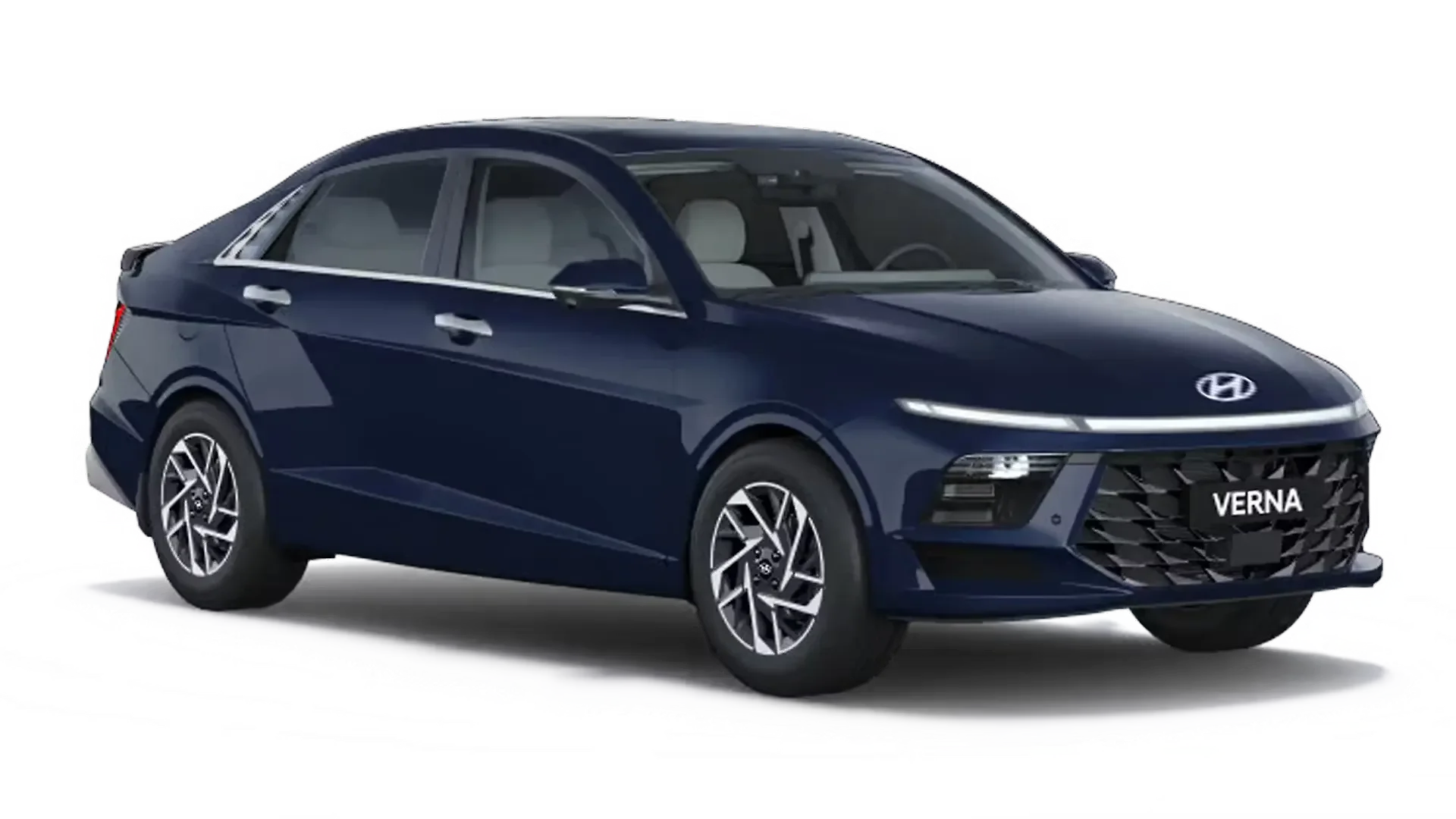
Namaste Car described the Verna as a car where the front and rear look like two different designers worked independently. The fastback silhouette and full-width LED bar are genuinely striking in traffic. Buyers either love the boldness or find it incoherent, and there is little middle ground. 7.5 / 10 |
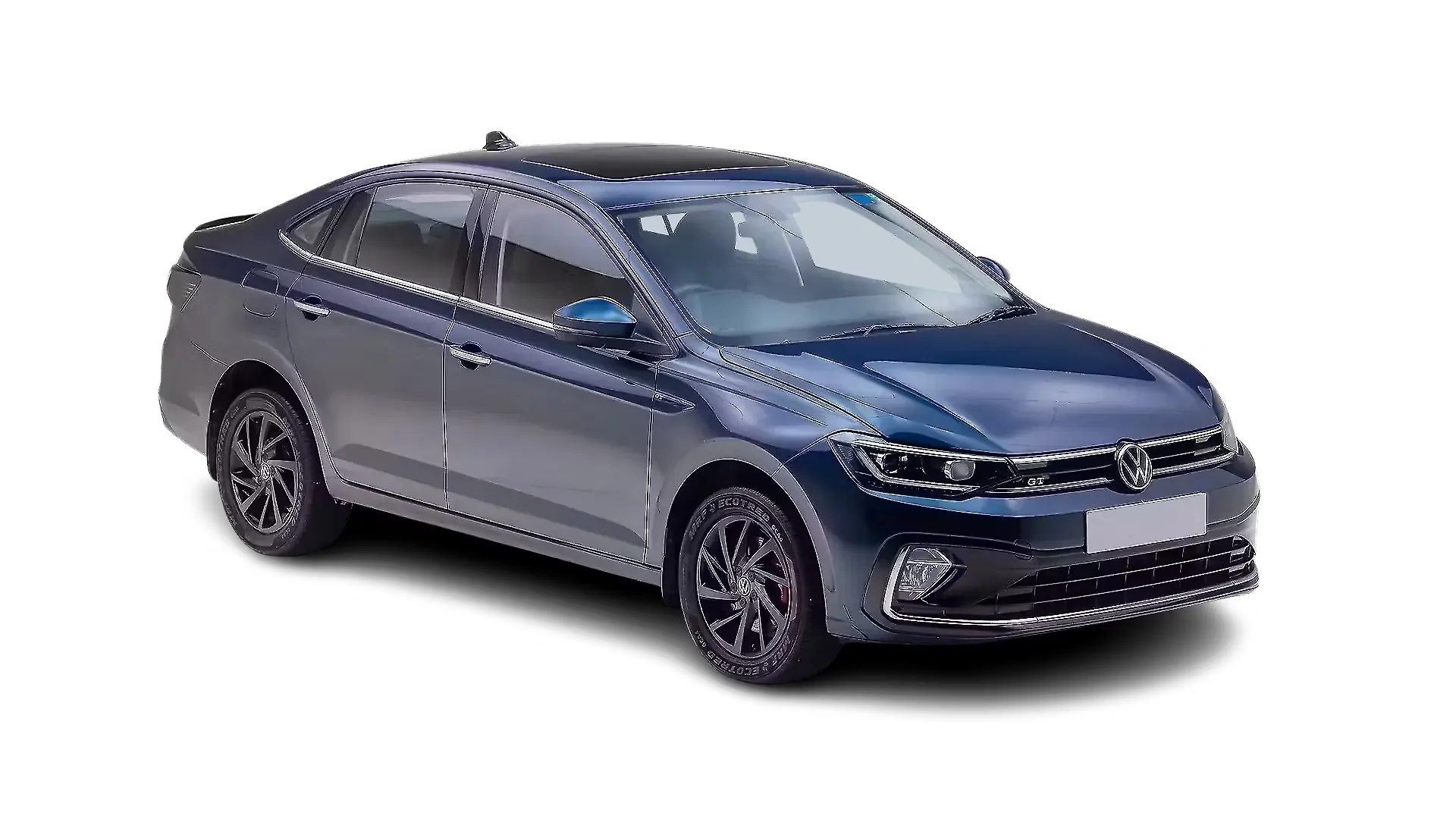
The Virtus looks like a proper three-box sedan rather than a stretched hatchback, a distinction Namaste Car specifically called out. The long bonnet and chrome-laced grille give it a mature, planted stance. The GT trim adds blacked-out alloys and red calipers for buyers who want subtle aggression without the drama. 8.0 / 10 |
Statement makersVerna's bold fastback silhouette is more visually distinctive on the road
|
Interior |
Dual 10.25-inch screens, ambient lighting woven into the dash, and ventilated rear seats create a lounge the segment cannot match. Fit and finish is typical Hyundai, meaning among the best in class, though hard plastics dominate below the waistline. The rear seat space is the most generous in the segment. 8.0 / 10 |
The Virtus cabin is clean and functional but clearly trails on technology and visual drama. The 10-inch touchscreen is lag-free and wireless CarPlay works reliably, but the overall ambience feels workmanlike beside the Verna's dual-screen setup. Rear seat width is slightly narrower, making three-abreast trips less comfortable. 7.0 / 10 |
Feature-hungry familiesVerna's dual-screen cabin and rear ventilated seats set the segment benchmark
|
Performance |
The 160PS turbo-petrol dispatches 0-100 km/h in 8.1 seconds and delivers strong mid-range punch that MotorBeam described as genuinely exciting in the manual variant. The 7-speed DCT is refined, though it prioritises efficiency over aggression off the line. The 115PS NA petrol suits buyers who want relaxed, frugal daily driving. 8.0 / 10 |
Faisal Khan's Natrax record of 204 km/h with the 1.5 TSI running flat-out for 24 hours illustrates just how composed and overbuilt this engine is. MotorBeam noted the 1.5 TSI is audibly louder than the Verna's turbo but feels more mechanical and rewarding when pushed. The 1.0 TSI is more accessible for buyers who do not need the full 150PS. 8.5 / 10 |
Driving enthusiastsVirtus 1.5 TSI is the more complete performance package at sustained high speeds
|
Ride Quality |
The Verna rides well over sharp city bumps and potholes, with its suspension tuned for urban road realities. The rear suspension stiffens noticeably at higher speeds and over undulating highway surfaces, a consistent observation across Gagan Choudhary and Arun Panwar's reviews. It is a comfort car for cities more than highways. 7.0 / 10 |
The Virtus strikes the better balance between body control and long-distance comfort. It absorbs highway undulations with more composure than the Verna and does not transmit fatigue to rear passengers on extended runs. The trade-off is slightly more thud over sharp, isolated potholes in slow urban traffic. 8.0 / 10 |
Highway commutersVirtus maintains composure and passenger comfort over longer distances
|
Build Quality |
Hyundai's panel gaps and fit-finish are among the best in the Korean segment, and the Verna continues that tradition. Doors close with a solid thud and interior plastics feel correctly placed. The bonnet, however, lacks insulation, something MotorBeam flagged during the comparo shoot. 7.5 / 10 |
Volkswagen's MQB A0 IN platform brings genuine German solidity to this price point. Faisal Khan's 24-hour endurance run at Natrax is the most compelling evidence of structural and mechanical integrity available for any car in this segment. Bonnet insulation is absent, matching the Verna, but the overall shell feels more rigid. 8.5 / 10 |
Long-term keepersVirtus MQB platform and proven endurance credentials inspire more long-term confidence
|
Value for Money |
The Verna packs more features per rupee than any rival in the segment: ADAS, panoramic sunroof, ventilated rear seats, dual screens, and a 360-degree camera often arrive before the price breaks Rs 15 lakh. For a buyer who ticks the feature checklist, the Verna is genuinely hard to fault on value. 7.5 / 10 |
The Virtus costs similar money but delivers fewer cabin features. Its value proposition rests on the 5-star safety rating, stronger mechanical package, and lower long-term ownership costs backed by Volkswagen's extended warranty options. MotoWagon and The Driving Diary both noted the Virtus rewards buyers who prioritise substance over specification sheets. 7.5 / 10 |
Feature-first buyersVerna delivers the longest feature list for the money at every trim level
|
Practicality |
The Verna's rear seat is the widest in the segment and three adults fit without the usual sedan compromise. Boot space is competitive at around 528 litres. The panoramic sunroof reduces usable headroom slightly for taller rear passengers, a trade-off Namaste Car specifically pointed out. |
The Virtus boot at 521 litres is class-competitive and opens to a wide, square aperture that swallows luggage more easily than its dimensions suggest. Rear legroom trails the Verna marginally, but the seats offer better lateral support for occupants on longer journeys. It is the more practical car for boot-heavy use cases. |
Boot-priority buyersVirtus boot aperture loads luggage more efficiently for frequent travellers
|
The Verna scores 7.7/10 and the Virtus 8.4/10, from 10 independent creators. The overall number is only part of the story here: the dimension breakdown is where the real comparison lives.
MotorBeam: Hyundai Verna vs Honda City vs Volkswagen Virtus - The Ultimate Comparo | MotorBeam