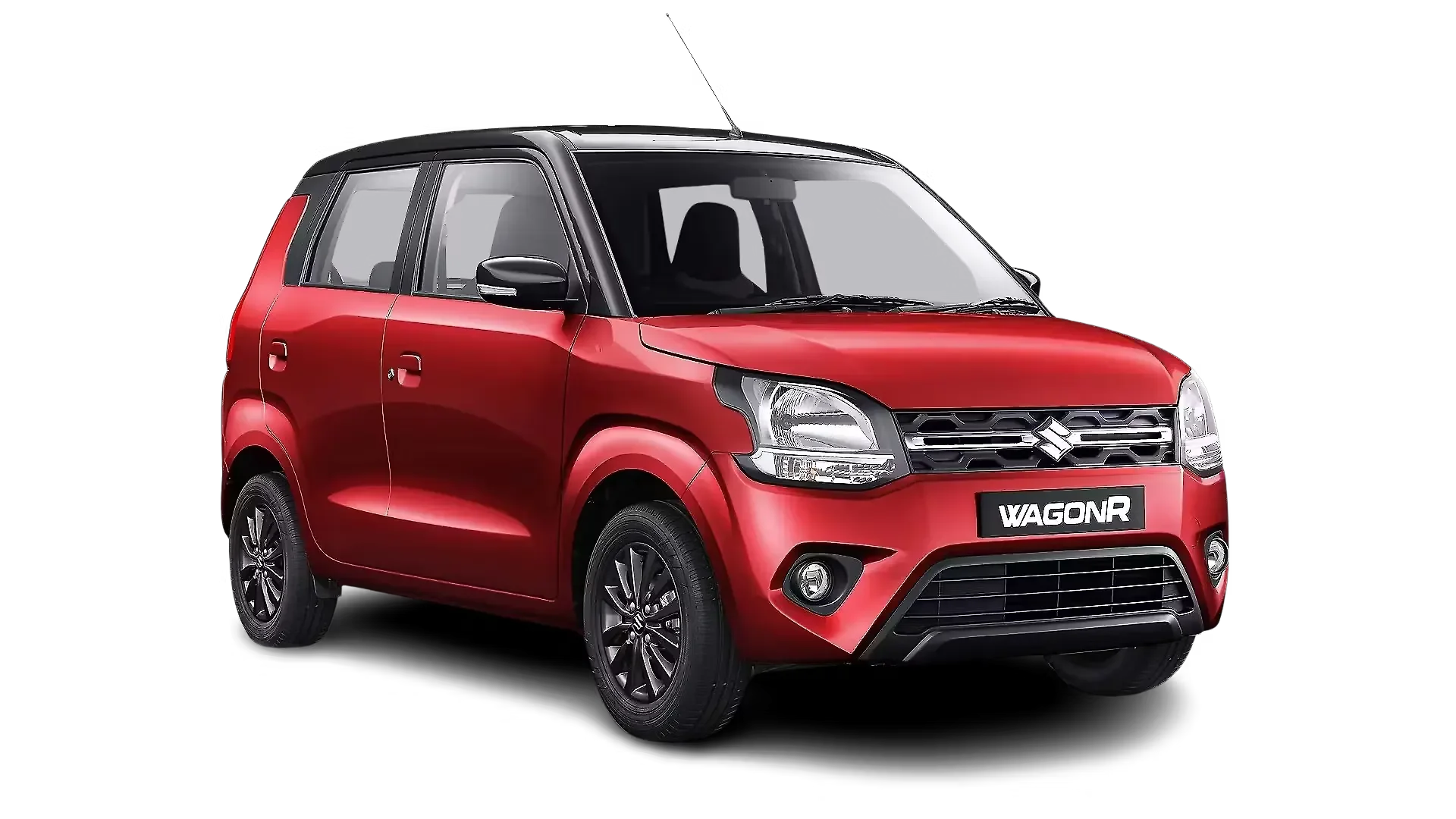
The third-generation Maruti WagonR sticks to what made it a two-million-strong success in India: tall-boy practicality, segment-leading space and frugal Maruti running costs. The new Heartect platform, wider stance and optional 1.2-litre petrol finally give it genuine highway legs, even if light build and soft suspension still betray its city-car DNA.
Jury Score Breakdown
What Works
- Genuinely cavernous cabin with 6-foot-plus headroom
- Punchy 1.2 K12 petrol with strong mid-range
- Real-world ~16 km/l, plus CNG variant for taxi-grade running costs
- Largest boot in segment at 341 litres, expandable to 710
- Maruti's nationwide service network and strong resale
Watch Out For
- Steering offers zero feedback and never weights up
- Light build means high road and wind noise on highways
- Pronounced body roll and nose-dive under hard braking
- Hard plastics and basic feature set in lower variants
Design
The third-gen WagonR finally breaks from the rigid box, adding subtle curves, vertical tail-lamps and a blacked-out C-pillar that creates a floating-roof effect. A 125 mm width increase makes it visually less awkward from the side, though the small wheels and tall-boy proportions still dominate. Chrome detailing around the grille and headlights lifts the front, while the overall stance reads as evolutionary rather than revolutionary. Against the more youthful Maruti Swift, the WagonR makes no attempt at being stylish; it is a practical silhouette built around interior volume. MotorBeam rightly notes the design looks fresh in the metal, but anyone hoping for the boldness of newer hatchbacks will find it conservative. It is honest, functional design that prioritises packaging over kerb appeal.
Interior & Features
Inside, the WagonR is all about space. The wheelbase grows by 35 mm, freeing up generous knee and legroom, while headroom remains the segment benchmark thanks to the tall-boy roof. Three adults can finally sit across the rear bench without shoulder-clashing. The dashboard takes a quirky, asymmetric approach with the Ignis-sourced steering wheel and a 7-inch SmartPlay Studio touchscreen offering Apple CarPlay and Android Auto on higher trims. Hard plastics dominate and fit-and-finish is acceptable rather than impressive. Front seats lack height adjust on most variants and under-thigh support is short, but doors open almost 90 degrees for easy ingress. Boot space is class-leading at 341 litres, expanding to 710 with the 60:40 split rear seat folded, comfortably outdoing many pricier hatchbacks.
Build Quality & Technology
Build quality is where the WagonR shows its price. The shell is light, panels feel thin, and insulation is modest, so road, wind and engine noise all filter into the cabin above 80 km/h. Faisal Khan's high-mileage rental example rattled extensively, though that reflects abuse rather than factory standard. On safety, all variants now get ABS, driver airbag, front seatbelt reminders, reverse parking sensors and speed alerts at 80 and 120 km/h, with a passenger airbag on higher trims. Feature highlights include the 7-inch touchscreen with cloud services, steering audio controls and a multi-info display showing real-time and average mileage. There are no fancy touches like adjustable rear headrests or a reverse camera, but the essentials for an entry hatchback are present.
Performance & Powertrain
Buyers choose between the 1.0-litre K10B making 67 PS and 90 Nm, and the 1.2-litre K12 from the Swift and Ignis producing 83 PS and 113 Nm. The smaller engine is refined low down but gets vocal past 5,000 rpm and is best suited to city duties, paired with a 5-speed manual or AMT. The 1.2 transforms the car: light kerb weight plus a strong mid-range means it genuinely flies, though it screams above 5,000 rpm and the redline arrives early at 6,000. The gearbox is slick if slightly notchy, and the clutch is light. A factory-fitted CNG option exists for taxi operators and budget buyers, with Arun Panwar reporting real-world economy near 38 km/kg on a light foot.
Ride Quality & Handling
The new Heartect platform is the WagonR's biggest dynamic gain. Straight-line stability at highway speeds is noticeably improved over the previous car, and the chassis feels stiffer and more planted. The suspension remains deliberately soft, which pays off at city speeds where broken roads and speed breakers are absorbed without drama. Push harder, however, and the tall body pitches under braking and rolls considerably through corners, exactly as the proportions suggest. The electric steering is feather-light for parking but never weights up, offering no feedback at speed. Brakes work adequately but the nose dives sharply under hard stops. This is unambiguously a city car with occasional highway capability, not a hatchback you corner for fun like a Swift or i20.
Price & Value
Priced across 12 variants from roughly ₹4.85 lakh on-road for the LXi to about ₹6.30 lakh for the top VXi+ AMT in Mumbai, the WagonR sits squarely in entry-hatchback territory. Against the pricier Maruti Swift and Baleno, or the Hyundai i20, it cannot match feature lists or polish, but it undercuts them meaningfully and offers more cabin space than any rival at this money. Real-world economy near 16 km/l on petrol, plus factory CNG, keeps running costs low enough that fleet operators buy it by the thousands. Maruti's service network and strong resale seal the value argument. For first-time buyers, families wanting a roomy second car, or anyone running Uber/Ola duty, almost nothing else makes more rational financial sense.
What India's Reviewers Agree On
Consensus
- Cabin space, headroom and 341-litre boot are class-leading for the price
- 1.2-litre K12 engine transforms the WagonR's driveability over the older motor
- Light kerb weight delivers strong fuel efficiency around 16 km/l petrol
- Build feels light with audible road and wind noise at highway speeds
- Soft suspension produces significant body roll and pitch when pushed
Points of Disagreement
- Faisal finds the styling and NVH dated and underwhelming; MotorBeam considers the new design fresh and NVH 'drastically better than before'
- Reviewers split on whether the 1.2-litre engine is overkill for a city hatch or its single biggest upgrade
Individual Reviewer Verdicts
"An honest city tool with class-leading space, but dated NVH, vague steering and heavy body roll make it no driver's car."
"The new platform, wider body and 1.2 K12 make this the most complete WagonR yet, with practicality still unmatched."
"The CNG variant delivers nearly 38 km/kg with a light foot, which is why taxi operators keep buying it."