 Image: Mercedes-Benz press kit
The only entry-luxury seven-seater on sale, with genuine SUV proportions and Mercedes refinement, but pay only if you truly need that third row.
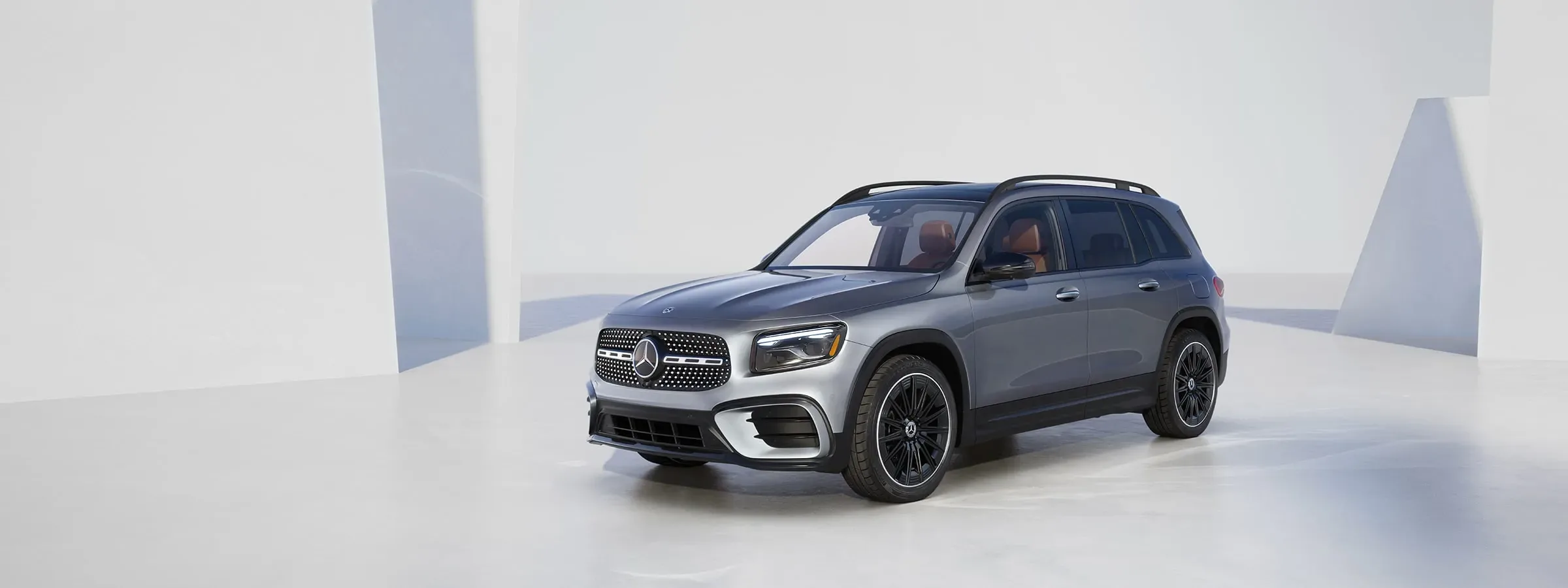
The 2026 Mercedes-Benz GLB is India's only entry-luxury seven-seat SUV, slotting between the GLA and GLC with boxy, baby-G-Class proportions. It arrives with petrol, diesel and the all-electric EQB, all imported as CBUs. For families who genuinely need seven seats inside a luxury badge, there is no direct rival; for everyone else, the five-seat GLC is a more rounded buy.
Spec note: the Mercedes-Benz GLB has limited Indian road-test coverage, so this verdict also draws on international reviews (carwow). Those cover UK/European/US-spec cars; variants, features and pricing differ in India.
The GLB wears a deliberately upright, boxy silhouette that Mercedes itself nicknames the baby G-Wagen, and in person it works better than in photos. It is actually taller than the GLC, which gives it real SUV presence on Indian roads. The AMG Line trim adds a sharper grille, gloss black detailing and 19-inch alloys, while the standard car runs 18s. Roof rails, a flat tailgate and chunky cladding reinforce the utilitarian look. The EQB differentiates itself with a closed grille, connected DRL signature and blanked intakes. Carwow notes the diffuser and quad-tip exhaust surrounds are decorative; the real pipes sit underneath. The proportions are the win here: compact footprint outside, genuinely tall and square inside.
Inside, the GLB carries over the A-Class dashboard architecture with twin 10.25-inch screens, turbine vents and configurable 64-colour ambient lighting. The driving position is set high, with excellent headroom and a commanding view forward. Material quality is a mixed bag: soft-touch surfaces sit alongside scratchy plastics on the lower dash and door tops, a reminder this is entry-luxury, not S-Class. The second row slides and reclines with 40:20:40 split, and three abreast is feasible thanks to a wide body and small floor hump. The third row is the headline trick but realistically suits children only; adults will find headroom tight and thigh support absent. Lumbar adjustment is reserved for higher trims, an irritation Gagan Choudhary flags repeatedly.
Build quality is solid where it counts but inconsistent in places. The dashboard top, steering and seat upholstery feel premium, while lower plastics and the wobbly infotainment surround betray cost-cutting. MBUX remains the segment benchmark: voice control via Hey Mercedes, crisp graphics, configurable driver display and augmented-reality navigation on higher trims. Standard kit includes seven airbags, dual-zone climate, wireless charging, electric tailgate, panoramic sunroof on top trims and a 10-speaker Burmester system on the EQB. Notable omissions are ventilated seats, a 360-degree camera feed while moving, and lumbar support on lower variants. Both cars get full ISOFIX, curtain airbags extending to row three, blind-spot assist and active brake assist as standard.
Three powertrains are on offer. The GLB 220d uses a 2.0-litre diesel making 190 hp and 400 Nm through an 8-speed dual-clutch, claimed 0-100 in 7.6 seconds and tested at 7.51 by carwow despite wet tarmac. The EQB 300 produces a combined 228 hp and 390 Nm from twin motors, with permanent all-wheel drive and 0-100 around 7 seconds, though top speed is capped at 160 kmph. The entry 1.3 petrol with 163 hp feels underwhelming against either. V3Cars found the EQB roughly a second quicker than the diesel in comfort mode and more nimble through Kodaikanal's turns. The diesel returns strong real-world economy; the EQB delivers around 420 km of usable range and supports 100 kW DC fast charging.
Ride quality is the GLB's most debated trait. On smooth surfaces it absorbs bumps well, with a pliant initial stroke that suits city potholes and cobbles. The problem appears on patchwork roads, where suspension thuds and run-flat tyre roar carry into the cabin. Adaptive dampers, offered in Europe, are not available here, so there is no way to dial in a sportier setup. Body roll is present but controlled, and the steering is accurate without being playful. The EQB masks suspension noise better because there is no engine drone to layer over it, but the diesel actually feels quieter overall because its powertrain noise covers the thuds. Brakes are firm and progressive, and the high seating gives genuine confidence in traffic.
This is where the GLB gets complicated. Imported as a CBU from Mexico, the diesel is expected to start around 62 to 65 lakh ex-showroom and climb past 72 lakh for higher trims, pushing on-road pricing close to 80 lakh. The EQB lands in similar territory despite state EV tax breaks in some regions. That places it uncomfortably close to the five-seat GLC, which offers a plusher cabin and better second-row comfort. Against the BMW X1, Audi Q3 and the smaller Mercedes-Benz GLA, the GLB justifies its premium only on the strength of that third row. If you genuinely need seven seats with a three-pointed star, there is no alternative; otherwise the GLC is the smarter buy.
"Shortlist it: a properly tall, family-friendly small SUV with the best infotainment in the business."
"Buy only if you strictly need seven seats; the diesel makes more sense than the EQB for long trips."
"EQB feels quicker and more refined in town, but the diesel wins on range and highway running cost."
"Five drive modes, downhill speed control and a 3-year residual guarantee sweeten the ownership pitch."