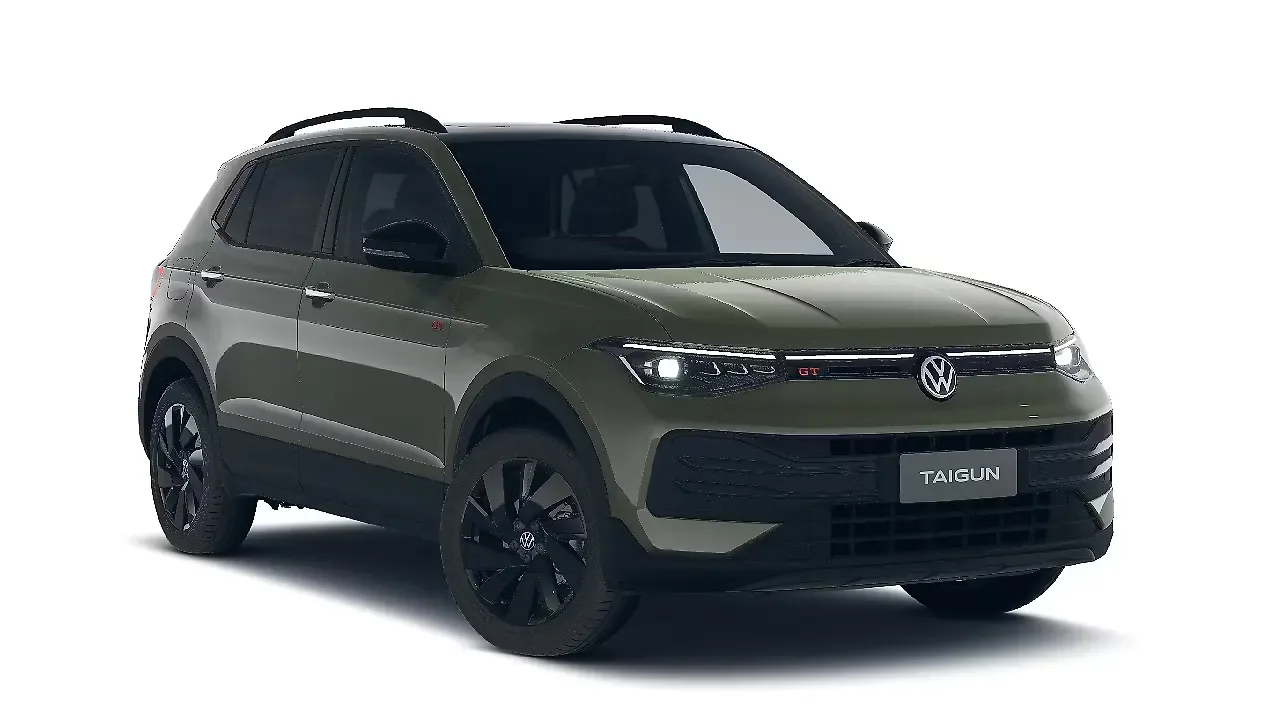
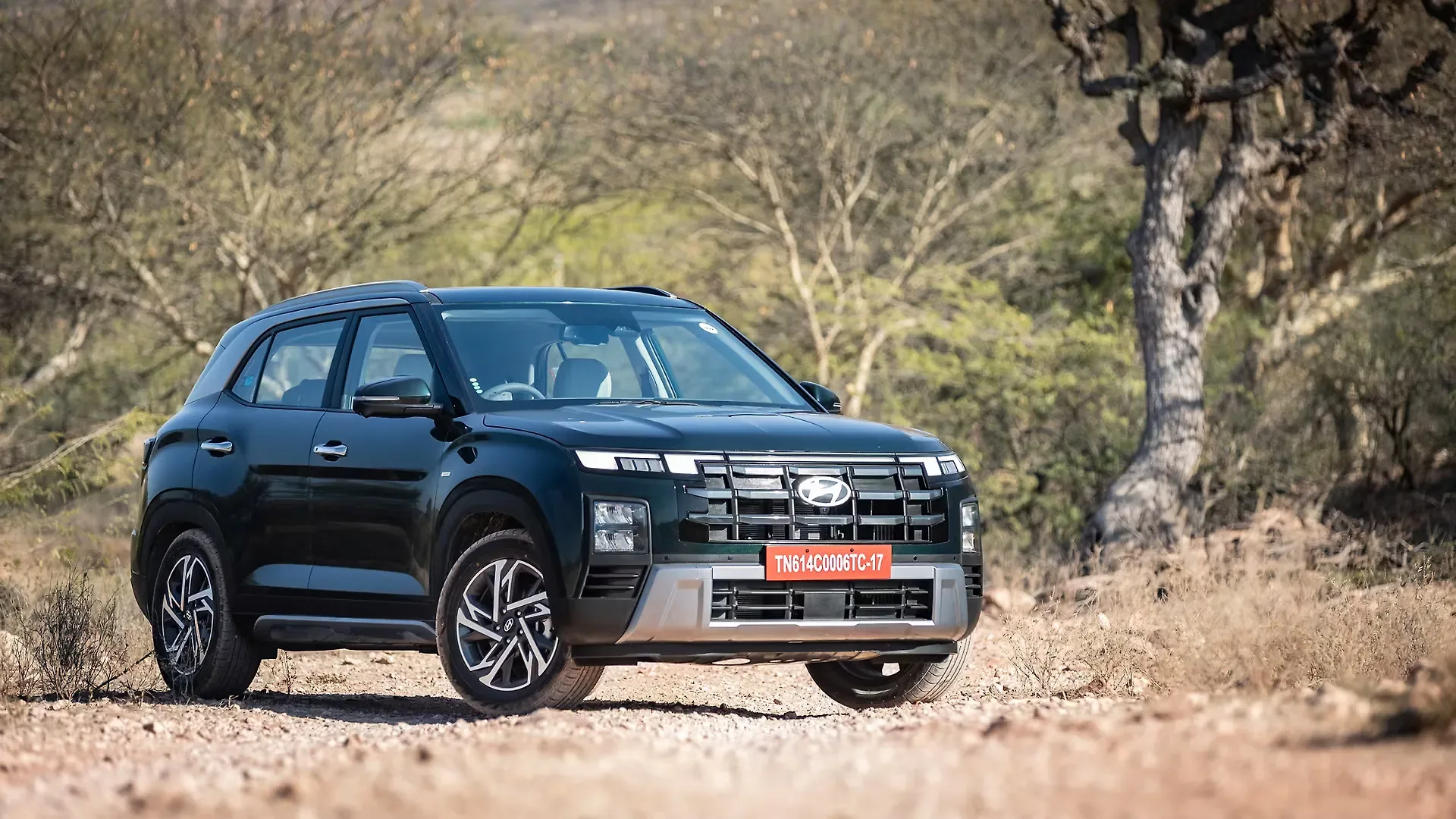
Hyundai Creta vs
Volkswagen Taigun
One car coddles your family; the other rewards the person doing the driving.
Most buyers decide here. Read this before anything else.
- You drive mostly in city traffic and want ADAS lane-keep and adaptive cruise to reduce fatigue on daily highway commutes.
- You carry parents or in-laws regularly and the wider rear cabin with zero floor hump means three adults sit without negotiating space.
- You want one car that does everything adequately: school run, weekend road trip, occasional highway stretch, without asking you to adapt to it.
- You prioritise a low-stress ownership experience and prefer Hyundai's dense service network over a premium European brand's workshop costs.
- You are buying your first turbocharged SUV and want the 1.5 turbo DCT's punch without the Taigun's firmer low-speed ride.
- You value a feature checklist that satisfies every family member: ventilated seats, panoramic sunroof, wireless charging, and Level 2 ADAS at the same trim level.
- You spend weekends on ghat roads or open highways and want a car that tightens up through corners rather than merely surviving them.
- You care about long-term structural integrity and the five-star Global NCAP rating matters more to you than any individual feature.
- You will keep this car for eight or more years and know that Volkswagen's MQB platform ages better mechanically than most Indian-market alternatives.
- You are an experienced driver who finds most Indian SUVs numb and wants genuine steering feel and a chassis that communicates the road.
- You prefer a smaller, more precise footprint in tight parking and do not need the extra rear-seat width that the Creta's wider body provides.
- You are considering the 1.5 TSI DSG and want Active Cylinder Technology's real-world fuel savings on long interstate runs.
The Creta scores 6.7/10, the Taigun 7.8/10. In real life, they are built for different people.
The Creta's Level 2 ADAS handles lane centring and adaptive cruise, cutting fatigue on four-plus hour drives. The Taigun offers no ADAS in this segment at any price point. For a family of four covering 400 km regularly, that gap is meaningful.
PowerDrift noted that the Taigun GT's wider, grippier tyres and composed chassis give the driver real confidence through corners, while the Creta prioritises passenger comfort over driver engagement. The 1.5 TSI DSG's torque delivery on uphill switchbacks is particularly strong. Drivers who enjoy the climb will find the Taigun the more willing partner.
The Creta consistently holds stronger resale values in India because of its volume, brand familiarity, and Hyundai's service footprint. The Taigun commands respect but a smaller used-car buyer pool means longer selling times. For buyers who trade in every five years, the Creta's resale trajectory is more predictable.
The Taigun's new 8-speed torque converter on the 1.0 TSI replaces the older 6-speed torque converter and improves low-speed refinement, but firm suspension still transmits sharp urban potholes into the cabin. The Creta's softer setup absorbs broken city roads more willingly. Rohit Paradkar noted the Taigun's ride remains its weakest point in city conditions.
Scores shown inline. "Best for" tells you who each result matters to.
| Axis | Hyundai Creta | Volkswagen Taigun | Best for |
|---|---|---|---|
Design |
The 2024 facelift gives the Creta a Tucson-inspired split-lamp face with a wide connected grille and stronger road presence. Reviewers are divided: MotorBeam called it bold, others found the styling polarising. The side profile stays familiar with 17-inch diamond-cut alloys. 7.5 / 10 |
The Taigun facelift adds a connected LED light bar, an illuminated VW logo, and cleaner bumper lines that align it with global Volkswagen design language. PowerDrift said it looks 'so damn good' even standing next to the angrier Creta N Line. The silhouette is restrained and ages well. 8.0 / 10 |
Design-conscious buyersTaigun's European restraint reads as premium without trying too hard
|
Interior |
The curved dual-screen layout with a 10.25-inch infotainment display and 10.25-inch digital cluster is the segment's most visually impressive dashboard. Dual-zone climate, ventilated front seats, and physical climate buttons make the Creta practical to live with daily. Hard plastics remain on lower panels, but feature density at each trim is class-leading. 8.0 / 10 |
The Taigun's cabin is handsome but restrained. The updated 10-inch touchscreen and new 10.25-inch digital cluster add modernity, but hard plastics dominate touch-points. Namaste Car noted that the interior feels built to last rather than built to impress, which is accurate and honest. 7.0 / 10 |
Feature-hungry familiesCreta's feature count justifies its price across most trims
|
Performance |
The 1.5 turbo petrol produces 160 PS and 253 Nm through a 7-speed DCT, with paddle shifters and drive modes. PowerDrift confirmed the Creta N Line is quicker in a drag run than the Taigun GT. The base 1.5 NA petrol is refined and low-maintenance but runs out of breath above 120 kmph. 8.0 / 10 |
The 1.5 TSI EVO produces 150 PS and 250 Nm with Active Cylinder Technology and a 7-speed DSG that feels surgically precise. Faisal Khan called it the segment's most driver-focused engine. The 1.0 TSI's new 8-speed Aisin torque converter improves everyday driveability without sacrificing character. 8.5 / 10 |
Enthusiast driversTaigun's DSG and chassis communication reward skilled drivers more consistently
|
Ride Quality |
The Creta's suspension tuning prioritises passenger comfort, absorbing broken city surfaces and highway undulations with minimal intrusion into the cabin. V3Cars rates the ride as one of the segment's most family-friendly. High-speed stability is competent without being exceptional. 7.5 / 10 |
The Taigun rides firmly, especially in city conditions over sharp bumps. Rohit Paradkar flagged this as a consistent real-world limitation. On smooth highways and ghat roads, the firmer setup pays dividends in body control, but daily urban use reveals the trade-off clearly. 7.5 / 10 |
City commutersCreta's softer tune absorbs Indian urban roads more forgivingly
|
Build Quality |
The Creta has improved panel alignment and a solid feel, consistent with Hyundai's maturing build standards. It achieved a four-star Global NCAP rating. However, the door thud and overall structural solidity remain a step behind the Volkswagen, as most reviewers including MotorOctane acknowledge. 7.0 / 10 |
The Taigun's MQB platform delivers the segment's most confidence-inspiring structural integrity. Five-star Global NCAP rating, tight panel gaps, and doors that close with a vault-like thud set a benchmark. Gagan Choudhary consistently rates the Taigun's build as the comparison's clearest advantage. 8.0 / 10 |
Safety-first buyersTaigun's five-star NCAP and MQB rigidity are class-defining
|
Value for Money |
The Creta packs Level 2 ADAS, dual screens, ventilated seats, and a panoramic sunroof into mid-range trims at competitive prices. Hindi Auto Reviewer noted that the feature-per-rupee ratio is difficult to beat in the segment. Running costs and service accessibility reinforce the case. 7.5 / 10 |
The Taigun starts at a similar price but reaches Rs 22.83 lakh for fully-loaded variants. The feature list is thinner than the Creta's at equivalent trim levels. CarWale points out that you pay a premium for the platform, build, and driving experience, not for gadgets. 7.0 / 10 |
Feature-value seekersCreta delivers more usable technology per rupee at each trim step
|
Practicality |
The Creta's wider cabin means genuine three-abreast rear seating with no floor hump. PowerDrift confirmed it wins the three-passenger rear seat test outright. Boot space is competitive and the raised seating position suits multiple body types. |
The Taigun has more under-seat foot space, which suits taller rear passengers despite the narrower cabin. PowerDrift noted taller adults can tuck their legs comfortably. However, seating a third rear passenger is a compromise, and the narrower body confirms this is a four-person car at its best. |
Families of fiveCreta's wider, hump-free rear floor makes it the practical family choice
|
The Creta scores 6.7/10 and the Taigun 7.8/10, from 10 independent creators. The overall number is only part of the story here: the dimension breakdown is where the real comparison lives.
PowerDrift: Is the Hyundai Creta N Line really better than a VW Taigun GT? | PowerDrift Review