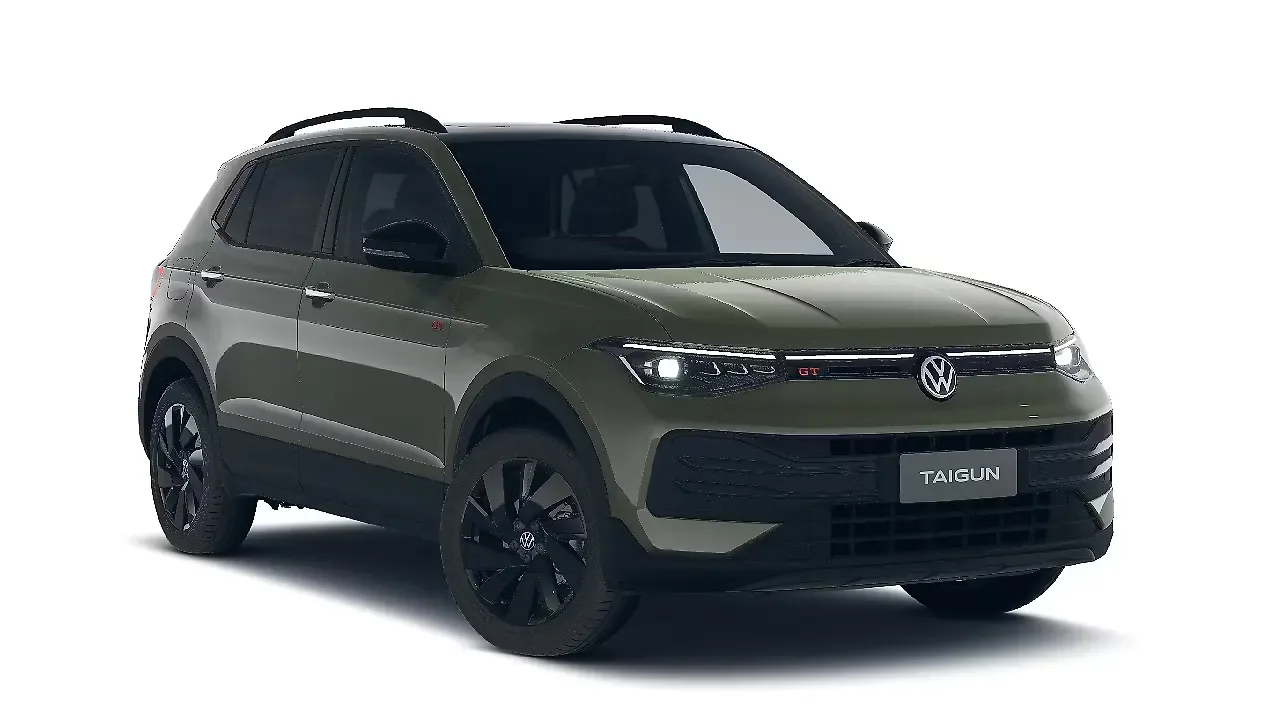
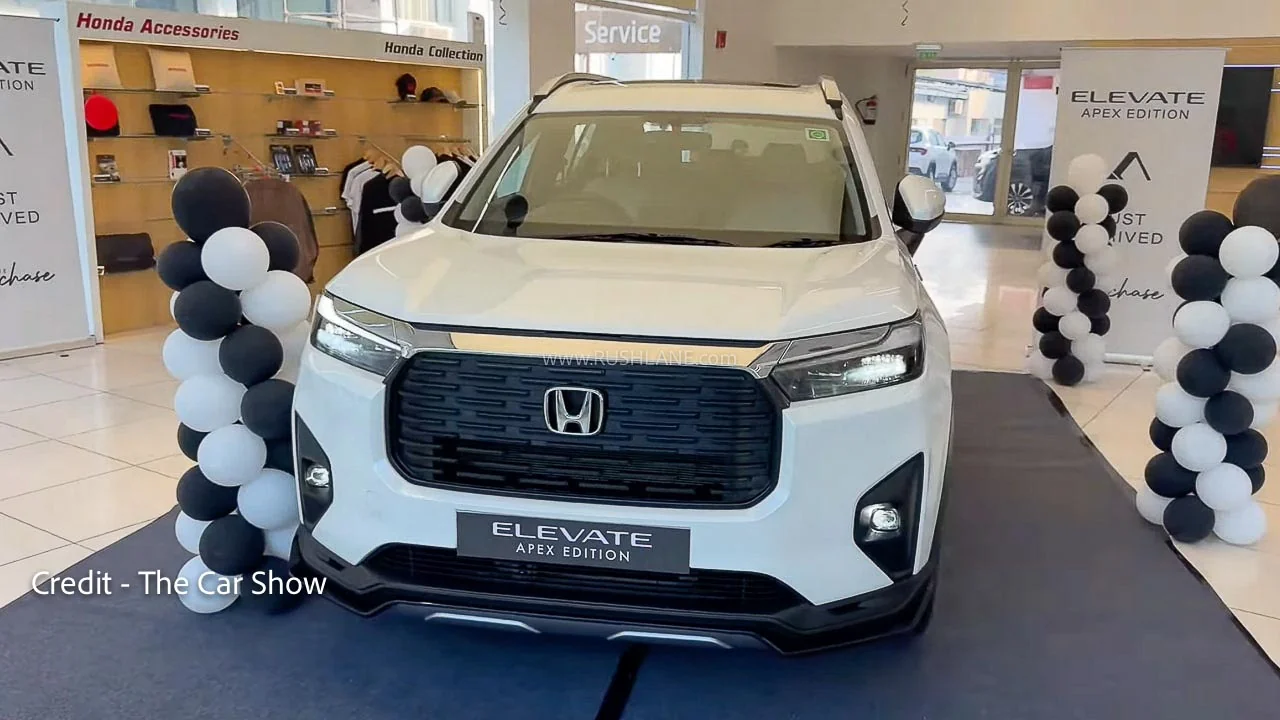
Honda Elevate vs
Volkswagen Taigun
Choose between Honda's refined everyday hauler and Volkswagen's driver-focused turbocharged performer.
Most buyers decide here. Read this before anything else.
- You clock 60-plus kilometres daily in stop-and-go traffic and need an engine that never feels stressed or thirsty.
- You are buying your family's only car and cannot afford unplanned service bills for the next seven years.
- You regularly carry four adults plus luggage on highway runs and need every centimetre of that 458-litre boot.
- You learned to drive on a Honda and want the same intuitive, light, confidence-inspiring feel scaled up to an SUV.
- You live on roads with unpredictable surfaces and want 220 mm of ground clearance to stop worrying about scrapes.
- You plan to keep the car for eight or more years and value Honda's resale floor and workshop network over launch-day thrills.
- You spend every weekend on winding hill roads and want a car that actually rewards you for pushing it.
- You joined the expressway generation and need the 1.5 TSI's 250 Nm to make overtakes feel effortless and safe.
- You carry two children and want the reassurance of a five-star Global NCAP rating and a tank-solid body structure.
- You upgrade cars every four to five years and want a car whose solid build holds residual value in the used market.
- You are an enthusiast who considers a seven-speed DSG a daily-use tool, not a weekend luxury.
- You want a compact SUV that draws second looks in a parking lot without looking overwrought or busy.
The Elevate scores 6.4/10, the Taigun 7.8/10. In real life, they are built for different people.
The Elevate's naturally aspirated engine and CVT are tuned for low-drama urban use, with light controls and a smooth idle that never feel like work. The Taigun's 1.0 TSI with its new 8-speed torque converter is also relaxed in traffic, but the 1.5 DSG variant can feel jerky at crawl speeds in heavy queues. MotorBeam noted the Elevate feels like a raised City, and in city conditions that familiarity is genuinely useful.
The Taigun's 1.5 TSI delivers 150 PS and 250 Nm, and the DSG holds gears confidently at triple-digit speeds with minimal wind intrusion through its tight body. The Elevate's 121 PS naturally aspirated motor runs out of urgency past 110 km/h, where the CVT's rubber-band behaviour becomes noticeable under a heavy foot. For a family that regularly covers 400-plus kilometres in a day, the Taigun arrives less fatigued.
Honda's service network is one of India's most consistent, and the i-VTEC's mechanical simplicity keeps maintenance bills predictable. Volkswagen's TSI engines are refined but turbocharged complexity and DSG servicing can push costs higher, particularly outside metro cities where authorised service points are fewer. For buyers in Tier-2 cities, the Elevate's simpler drivetrain is a practical advantage that compounds over time.
The Taigun is the segment's benchmark driver's car, full stop. The 1.5 TSI pulls cleanly from low revs, the DSG is surgically quick, and the chassis communicates grip with a precision the Elevate cannot match. Faisal Khan and MotorBeam both singled out the Taigun's steering and body control as class-leading on twisty roads. The Elevate is enjoyable in the manual variant, but it is a different category of fun.
Scores shown inline. "Best for" tells you who each result matters to.
| Axis | Honda Elevate | Volkswagen Taigun | Best for |
|---|---|---|---|
Design |
The Elevate adopts a tall, boxy silhouette with a bold grille and full-LED lighting that gives it genuine road presence. Faisal Khan noted the front draws visual cues from the larger Honda Pilot. It reads as purposeful rather than flashy, which suits buyers who want an SUV that ages well. 7.5 / 10 |
The 2025 facelift adds a connected LED light bar, an illuminated VW logo and sequential rear indicators that align the Taigun with global Volkswagen design. The silhouette is unchanged but the details are sharper and more premium-feeling. It looks like a car that costs more than its price tag. 8.0 / 10 |
Design-conscious buyersTaigun's facelift details read more premium at the kerb
|
Interior |
The Elevate inherits the City's clean, mature dashboard in a black-and-tan scheme with sofa-soft leatherette seats. The 10.25-inch touchscreen with wireless CarPlay and Android Auto handles the basics well. Thigh support is modest and hard-use long-haul drivers may notice it on four-hour stints. 7.0 / 10 |
The Taigun's cabin is handsome but honest about its materials, with hard plastics dominating the lower half. Ventilated front seats, a panoramic sunroof on the top variant and a new 10.25-inch digital cluster add genuine usability. Neither car pampers occupants with soft-touch surfaces throughout. 7.0 / 10 |
Comfort-focused familiesElevate's softer seats and warmer cabin tone suit longer passenger hauls
|
Performance |
The 1.5-litre i-VTEC makes 121 PS and 145 Nm and is the smoothest naturally aspirated engine in the segment. MotorBeam called it very refined and Punchy in the manual, and the short-throw gearbox rewards an enthusiastic driver. Above 110 km/h the CVT's limitations become apparent and the engine runs out of urgency. 7.0 / 10 |
The 1.5 TSI produces 150 PS and 250 Nm with Active Cylinder Technology, paired to a seven-speed DSG. The 1.0 TSI with the new 8-speed Aisin torque converter is also responsive for everyday driving. Both engines offer a depth of performance the Elevate cannot access at any throttle position. 8.5 / 10 |
Enthusiast driversTaigun's TSI engines and DSG set the segment benchmark
|
Ride Quality |
The Elevate rides with a suppleness that absorbs broken city roads well, and 220 mm of ground clearance removes anxiety on bad patches entirely. MotorBeam described the ride as quite good in urban conditions. It is not sporty but it is consistently comfortable for all five occupants. 7.5 / 10 |
The Taigun's stiffer, more European-tuned suspension delivers better body control at speed but transmits more low-speed urban thud. On expressways and smooth highways it is composed and planted. Buyers who primarily navigate potholed city roads may find it less forgiving than the Elevate day to day. 7.5 / 10 |
City road survivorsElevate's softer setup absorbs urban abuse more gracefully
|
Build Quality |
Honda's assembly quality is solid and panel gaps are tight, consistent with the brand's reputation for durability. The body shell does not feel as dense as European rivals and the doors close with a lighter thud. Long-term reliability, not launch-day solidity, is where Honda earns its reputation. 7.0 / 10 |
The Taigun carries a five-star Global NCAP rating and a MQB A0-IN platform that feels genuinely tank-solid. Doors close with a vault-like thud and the body resists flex on uneven surfaces. Rohit Paradkar and MotorBeam consistently rate the Taigun's structural integrity as the segment's best. 8.0 / 10 |
Safety-first familiesTaigun's five-star rating and MQB rigidity are unmatched here
|
Value for Money |
The Elevate's pricing is competitive but the feature list is thin relative to segment rivals, and there is no turbo, hybrid or diesel option to justify stretching the budget. What you pay for is Honda's proven reliability and low total cost of ownership, which is real value but invisible on a spec-sheet comparison. 7.0 / 10 |
The Taigun's Rs 13 to 22.83 lakh range covers wide ground, but the genuinely compelling variants cluster above Rs 17 lakh. Hard plastics and a limited feature set at mid-trims make the price feel stretched. The five-star safety rating and DSG engineering provide value that does not show up in feature-count tallies. 7.0 / 10 |
Total ownership buyersElevate's lower running costs balance its thinner feature list
|
Practicality |
The Elevate's 458-litre boot is class-leading and the rear bench is wide enough for three adults without the middle passenger feeling punished. The 220 mm ground clearance is the segment's highest, making it genuinely usable on rough rural roads. For a family that loads the car fully every weekend, the Elevate simply carries more. |
The Taigun's boot is smaller and the rear cabin is adequate for two adults but tight for three on long trips. The panoramic sunroof and ventilated seats on top variants add comfort rather than cargo utility. It is a car sized for couples or small families, not joint-family road trips. |
Larger familiesElevate's boot and rear room handle a full load more comfortably
|
The Elevate scores 6.4/10 and the Taigun 7.8/10, from 11 independent creators. The overall number is only part of the story here: the dimension breakdown is where the real comparison lives.
MotorBeam: Elevate vs Seltos vs Taigun vs Hyryder - Compact SUV Mega Battle! | MotorBeam