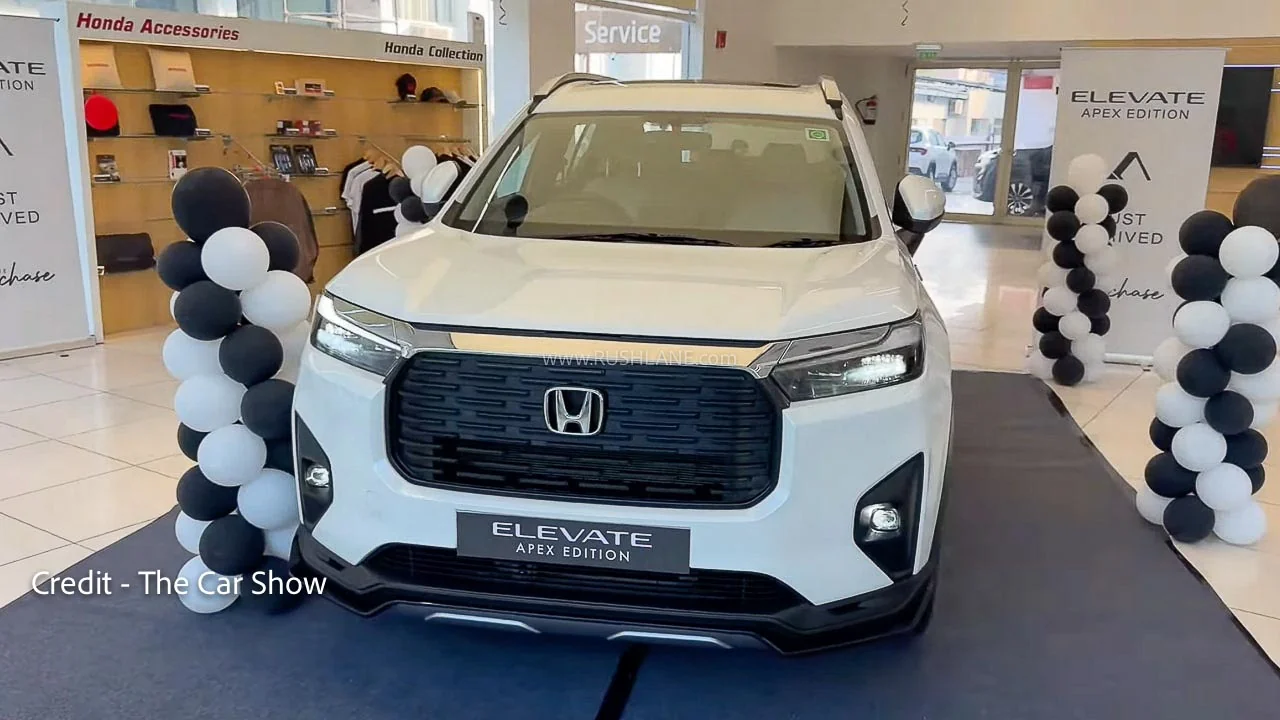
Honda Elevate vs
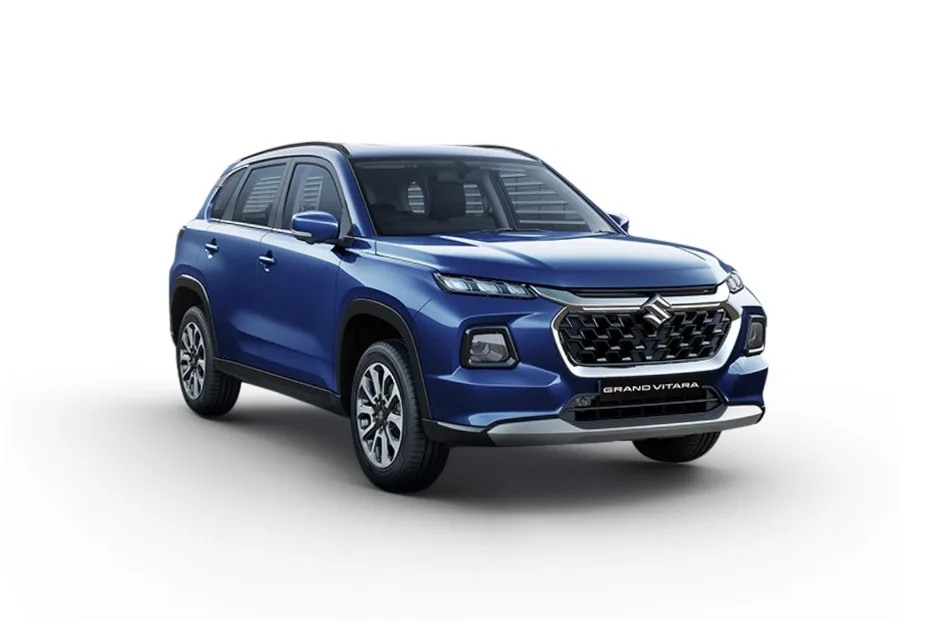
Maruti Grand Vitara
Choose between Honda's driver-focused reliability and Maruti's fuel-sipping hybrid comfort.
Most buyers decide here. Read this before anything else.
- You drive manual and genuinely enjoy the act of driving, not just arriving.
- You cover 60-80 km daily on mixed city and highway roads and want a refined, stress-free engine.
- You regularly carry five adults and need a boot that actually swallows luggage, not just promises to.
- You have family members who have owned Honda before and peace-of-mind servicing matters more than a list of features.
- You want the highest ground clearance in class and drive routes where potholes and speed-breakers are routine.
- You prefer a calm, uncluttered cabin over a screen-heavy cockpit and find busy interiors distracting.
- You drive primarily in city traffic and want fuel bills that genuinely shock you in a good way.
- You take frequent highway runs of 300-plus km and want to stop for fuel as rarely as possible.
- You have a family that complains about road noise and rough patches on state highways.
- You want a panoramic sunroof, ventilated front seats, and a head-up display without paying premium-segment prices.
- Maruti's nationwide service network is a real concern because you live outside a metro or travel to Tier-2 towns.
- You plan to hold the car for 6-8 years and want the strongest resale trajectory in the segment.
The Elevate scores 6.4/10, the Grand Vitara 6.5/10. In real life, they are built for different people.
The Grand Vitara's strong hybrid spends long stretches in silent EV mode in crawling traffic, cutting both fuel costs and cabin heat meaningfully. The Elevate's naturally aspirated engine is refined but always running, returning noticeably lower city figures. For a buyer covering 40-plus km daily in dense urban traffic, the hybrid's real-world 22-26 kmpl advantage compounds into significant savings over a year.
The Elevate's i-VTEC pulls cleanly through the rev range and the CVT holds pace well on open roads; Autocar India noted its composure at highway speeds felt genuinely settled. The Grand Vitara's three-cylinder hybrid can feel strained when pushed hard for extended overtakes, since the powertrain is tuned for efficiency rather than urgency. Drivers who enjoy pressing on will find the Elevate more satisfying on a long run.
The Grand Vitara scores the Jury's highest ride quality rating at 8.0, and Gagan Choudhary specifically praised how it absorbs broken surfaces without unsettling passengers. The Elevate's 220 mm ground clearance is the class leader and protects the underbelly, but its suspension tune is firmer, making sharp edges more noticeable inside. For passengers, the Grand Vitara is the more forgiving car.
Maruti holds the strongest resale values in the Indian market by a clear margin, and the Grand Vitara's hybrid badge adds a premium in the used market as fuel costs stay in the conversation. Honda has solid resale credentials but trails Maruti in volume and dealer reach, which affects certified pre-owned demand. Buyers treating the car as a medium-term financial asset should factor this gap seriously.
Scores shown inline. "Best for" tells you who each result matters to.
| Axis | Honda Elevate | Maruti Grand Vitara | Best for |
|---|---|---|---|
Design |
The Elevate wears a tall, boxy silhouette with a bold grille and tight body surfacing that Faisal Khan compared to the larger Honda Pilot at the front. It earns attention without resorting to aggressive styling, and the 220 mm ride height gives it a genuinely planted stance. Autocar India noted it draws attention without being flashy, which will suit buyers who want presence without polarising looks. 7.5 / 10 |
The Grand Vitara's split headlamps and two-part grille create a distinctive front end that Gagan Choudhary rated as the strongest stance in its immediate peer group. The rear is busier but settles down in person. It reads as a smartly turned-out SUV rather than a bold one, sitting comfortably in the mainstream without looking anonymous. 7.5 / 10 |
Bold but understated buyersTie: both land in the same confident-but-not-loud zone
|
Interior |
The Elevate's cabin borrows its architecture from the Honda City, which means clean layout, physical climate controls and excellent ergonomics. Autocar India praised the clear sightlines to the touchscreen and the logical control placement. The trade-off is a feature list that looks thin on paper: no ventilated seats, no HUD, no panoramic sunroof at any grade. 7.0 / 10 |
The Grand Vitara counters with a panoramic sunroof, ventilated front seats, a head-up display and a fully digital instrument cluster. The wide, well-cushioned seats offer better thigh support than the Elevate for longer drives. The cabin feels more contemporary on spec, though the ventilated seat fan intensity draws mild criticism for being underwhelming in peak summer. 7.0 / 10 |
Feature-seeking familiesGrand Vitara delivers noticeably more cabin technology for the price
|
Performance |
Honda's 1.5-litre i-VTEC produces 121 PS and revs cleanly to 7,000 rpm with a character that rewards drivers who work the engine. The manual gearbox is short-throw and light, making the Elevate the most engaging car to drive in this comparison. The CVT adds paddle shifters and manages highway pace without drama. 7.0 / 10 |
The Grand Vitara's hybrid system starts silently and is seamless in normal driving, but the three-cylinder petrol and e-CVT combination is tuned firmly around efficiency. Hard acceleration reveals the system's limits: it feels unhurried rather than eager. Buyers prioritising driving involvement over fuel economy will find the Grand Vitara competent but not exciting. 6.8 / 10 |
Driving enthusiastsElevate's naturally aspirated engine rewards rev-happy drivers
|
Ride Quality |
The Elevate rides on a tuning that prioritises body control over plushness. It handles broken urban roads well thanks to its ground clearance, but sharp-edged bumps register more noticeably inside than in the Grand Vitara. It is a composed, neutral ride rather than a cosseting one. 7.5 / 10 |
The Grand Vitara scores 8.0 for ride, the highest ride score in this comparison, and it earns that rating on real roads. Gagan Choudhary highlighted how it absorbs broken surfaces and keeps rear passengers settled, which matters on longer family trips across variable road quality. It is the more comfortable car for passengers in the back seat. 8.0 / 10 |
Highway family tripsGrand Vitara keeps rear occupants more comfortable over distance
|
Build Quality |
Panel gaps are consistent and the Elevate feels solid at highway speeds with minimal flex or road noise intrusion. Honda's long reputation for mechanical durability backs the physical impression, and the powertrain requires no complex hybrid components to maintain over time. 7.0 / 10 |
The Grand Vitara benefits from Toyota's hybrid engineering input, and the joint-venture platform brings tighter tolerances than older Maruti products. Gagan Choudhary noted the Grand Vitara feels more substantial than Maruti's recent compact SUVs. The hybrid battery is backed by an 8-year or 160,000 km warranty, which removes the biggest long-term concern around ownership. 7.5 / 10 |
Long-term ownershipHybrid warranty and Toyota input give Grand Vitara a slight durability edge
|
Value for Money |
The Elevate's value case rests on what you do not pay for: fewer features mean a simpler, lower-maintenance ownership story with Honda's established service network. At entry and mid grades it is competitively priced, but the top variants feel light on content relative to what rivals offer at the same price. 7.0 / 10 |
The Grand Vitara's hybrid variant commands a premium over the Elevate but the running cost advantage erodes that gap steadily for high-mileage users. Car Blog India noted that buyers covering over 1,500 km monthly will recover the price difference through fuel savings within two to three years. The feature-per-rupee ratio at mid-trim is strong. 7.2 / 10 |
High-mileage commutersHybrid savings make Grand Vitara better value over 4-plus years of ownership
|
Practicality |
The Elevate carries a 458-litre boot, the largest in this comparison, and rear legroom is genuinely generous for a car built on the City platform. The rear seat is wide enough for three adults on shorter trips. Namaste Car noted the Elevate's cabin storage is thoughtfully distributed with usable door pockets and a proper centre console. |
The Grand Vitara's boot is smaller at 373 litres due to the hybrid battery packaging, a real compromise for families who travel with full luggage. Rear seat space is adequate but the Elevate's passenger volume advantage is measurable. For families who regularly carry five with bags, the Elevate's cargo advantage is a genuine practical reason to choose it. |
Boot-space-focused familiesElevate's 458-litre boot beats the hybrid-compromised Grand Vitara clearly
|
The Elevate scores 6.4/10 and the Grand Vitara 6.5/10, from 7 independent creators. The overall number is only part of the story here: the dimension breakdown is where the real comparison lives.
Autocar India: Honda Elevate vs Kia Seltos vs Hyundai Creta vs Maruti Grand Vitara vs VW Taigun | Autocar India