Honda Elevate vs
Renault Duster
Proven refinement and reliability versus a turbocharged comeback built to thrill drivers.
Most buyers decide here. Read this before anything else.
- You clock 1,500-plus km a month on highways and want an engine that stays whisper-quiet for five hours straight without feeling stressed.
- You have a family of five and need a genuinely usable 458-litre boot that swallows a pram, two trolleys, and a cooler without drama.
- You are buying your first car and want the confidence of Honda's service network and a reputation for engines that rarely ask for attention.
- You or your co-driver rarely exceed 80 kmph in city traffic and the CVT's smooth, low-effort pull suits that rhythm perfectly.
- You are a tall driver who wants to sit upright with a commanding view and appreciates 220 mm of ground clearance on broken urban roads.
- You want a car you can hand to a family member in a smaller town without worrying about parts availability or technician familiarity.
- You drive a weekend mountain route regularly and want a suspension that makes the bad road disappear rather than remind you it exists.
- You merge onto expressways daily and the gap between 40 and 100 kmph needs to close fast, without waiting for a naturally aspirated engine to wake up.
- You spend most of your time in the driver seat alone or with one passenger and a driver-tilted cockpit with a digital cluster feels like it was built for you.
- You want a cabin that feels genuinely premium, with 48-colour ambient lighting, a panoramic sunroof, and Google Built-in on the touchscreen rather than mirrored smartphone apps.
- You replaced an old Duster and want the nostalgia of that rugged, planted feel in a modern body that no longer rattles over broken tarmac.
- You have no need for diesel and are happy to give up AWD in exchange for a 160 PS Mercedes co-developed engine in a car priced below Rs 20 lakh.
The Elevate scores 6.4/10, the Duster 8.4/10. In real life, they are built for different people.
The Elevate's naturally aspirated i-VTEC is built for exactly this: smooth, refined, and unstrained at 100-120 kmph cruise. Cabin noise stays low and the sofa-soft seats handle fatigue reasonably well for three hours. The Duster's turbo DCT is quicker on overtakes but the rear seat is noticeably tighter, which matters when three adults sit behind for a long stretch.
Faisal Khan called the Duster 'the new segment benchmark' for ride quality, and every reviewer in the jury echoes that. The suspension soaks up sharp edges and undulations with composure that no rival at this price matches. The Elevate rides well for its class but on genuinely bad roads the Duster simply feels like a more expensive car.
Honda's resale strength in India is structural: the City and City-platform cars hold value consistently across used-car markets. The Elevate should follow that pattern. The Duster is returning after a four-year absence and its resale trajectory in the new avatar is unproven, though the original Duster had strong residuals in its prime years.
The Duster's 160 PS turbo, wet-clutch DCT, and well-tuned chassis make it a genuinely rewarding car on curves. V3Cars notes the driver-angled cockpit reinforces that intent. The Elevate's manual gearbox is slick and the engine loves to rev, but the softer setup and City-derived platform do not match the Duster's composure and confidence at pace.
Scores shown inline. "Best for" tells you who each result matters to.
| Axis | Honda Elevate | Renault Duster | Best for |
|---|---|---|---|
Design |
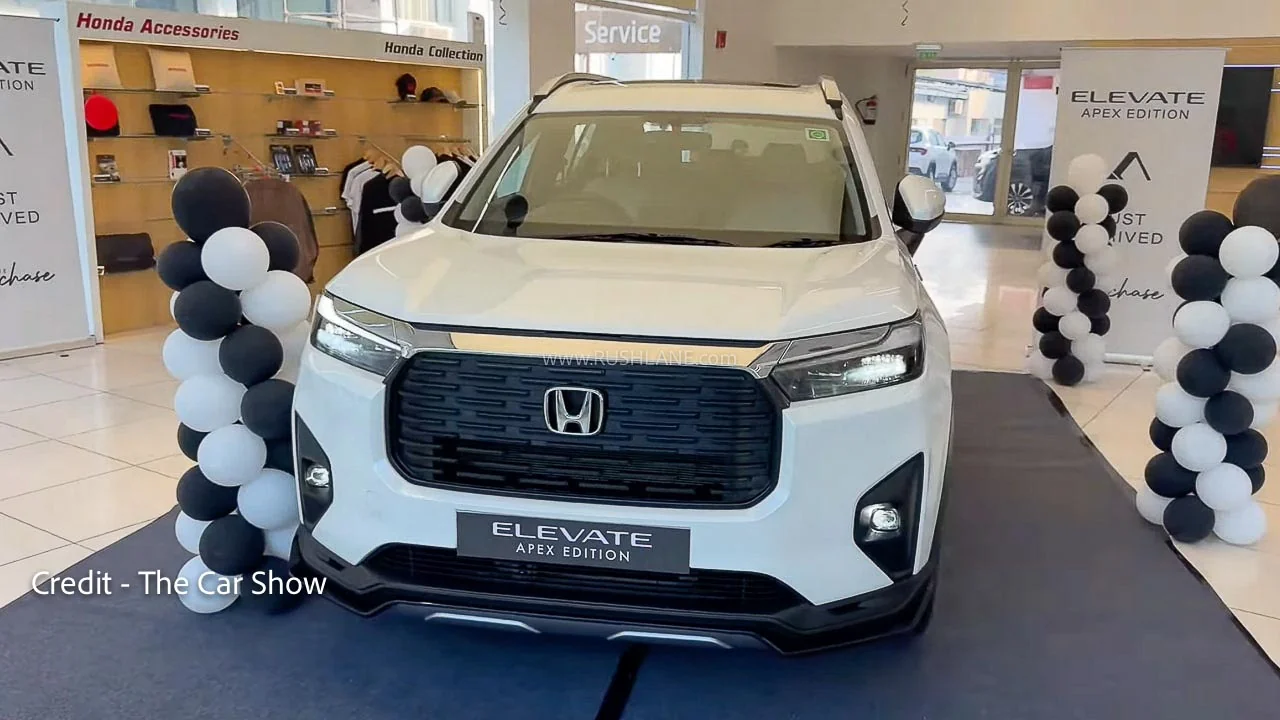
The Elevate goes deliberately boxy and upright, a conscious break from Honda India's usual sleek language. Faisal Khan notes the front borrows visual cues from the larger Honda Pilot, with a bold grille, full-LED lighting, and 17-inch alloys completing a face that reads as honest SUV rather than car-on-stilts. 7.5 / 10 |
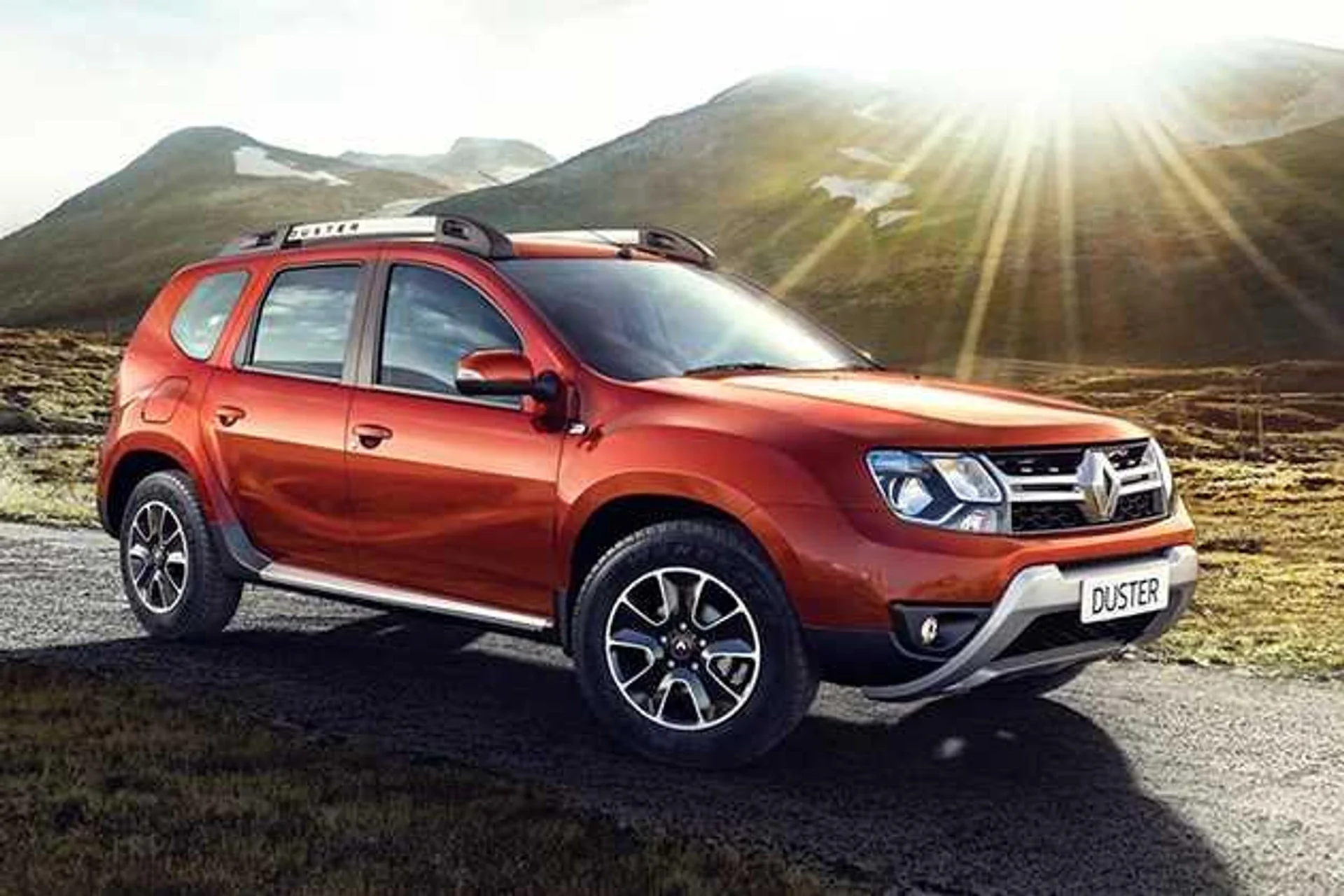
V3Cars describes the new Duster as muscular, with thick body cladding, 18-inch alloys, and connected LED tail lamps. The Renault badge is absent at the front; the Duster name sits directly on the grille, which is a confident move that signals the model stands on its own identity. 8.0 / 10 |
Bold statement seekersDuster's muscular stance and badge-forward grille cut a sharper, more distinctive silhouette
|
Interior |
The Elevate borrows its dashboard architecture from the Honda City, and that is largely a compliment. The black-and-tan layout is clean and mature, with leatherette seats that feel soft in the city. A 10.25-inch touchscreen with wireless CarPlay and Android Auto handles the tech brief without fuss. 7.0 / 10 |
V3Cars rates the Duster cabin second only to the Seltos in the segment. Faisal Khan highlights the 10.25-inch digital cluster, 10.1-inch Google Built-in touchscreen, 48-colour ambient lighting, panoramic sunroof, and dual-zone climate control. The driver-tilted screen layout creates a cockpit feel the Elevate does not attempt. 7.5 / 10 |
Tech-forward driversGoogle Built-in, ambient lighting, and panoramic sunroof give the Duster a premium edge inside
|
Performance |
The 1.5-litre i-VTEC makes 121 PS and loves to be revved cleanly to 7,000 rpm. The 6-speed manual's short throw and light clutch make it genuinely enjoyable in traffic. The CVT is smooth but unremarkable, suited to relaxed urban use rather than anyone seeking urgency. 7.0 / 10 |
Gagan Choudhary notes the 1.3-litre turbo was co-developed with Mercedes-Benz and produces 160 PS. The wet-clutch DCT delivers fast, responsive shifts that suit both city gaps and highway overtakes. The 39 PS advantage over the Elevate is felt immediately and consistently across all conditions. 7.5 / 10 |
Performance-minded buyers160 PS turbo and a fast DCT make the Duster the clear choice for drivers who want urgency
|
Ride Quality |
The Elevate rides comfortably for its class, with 220 mm of ground clearance helping it clear speed breakers and bad patches without grounding. At highway speeds it feels settled and composed. On sharp urban potholes it absorbs most impacts well but does not isolate the cabin as thoroughly as the Duster. 7.5 / 10 |
Faisal Khan called this the new segment benchmark, and the jury agrees unanimously. The Duster's suspension tune handles broken tarmac, undulations, and sharp potholes with a composure that feels engineered for Indian road reality. No rival at this price point matches it on a genuinely bad road. 9.0 / 10 |
Bad-road commutersDuster's benchmark suspension is the segment's strongest argument for buyers on rough daily routes
|
Build Quality |
Honda's build quality record in India is long and consistent. Panel gaps are tight, switchgear feels solid, and the City-derived platform brings proven structural integrity. Reviewers note no creaks or rattles even on poor surfaces, which is a product of decades of Honda India manufacturing discipline. 7.0 / 10 |
The new Duster is a monocoque design and reviewers note a clear step up from the older ladder-frame feel. Thick cladding, solid door shuts, and a well-damped cabin all suggest Renault has addressed the original's build concerns. The jury scores it 8.0, reflecting a confidence in construction that matches the premium cabin feel. 8.0 / 10 |
Long-term ownership buyersDuster edges ahead on score, but Honda's proven track record keeps this close
|
Value for Money |
The Elevate asks buyers to accept a naturally aspirated engine and a thinner feature list in a segment where rivals offer turbos and hybrids. What it returns is Honda's long-term reliability, strong service network, and predictable resale. For buyers who measure value in total cost of ownership over five years, that equation is competitive. 7.0 / 10 |
The Duster packs a 160 PS Mercedes co-developed turbo, Google Built-in, panoramic sunroof, and segment-benchmark ride into its price bracket. The missing diesel and AWD are real omissions for some buyers. Resale data for the new avatar does not yet exist, which adds a small unknown to the long-term value calculation. 7.5 / 10 |
Feature-per-rupee buyersDuster delivers more hardware per rupee at launch; Honda wins on proven long-term cost certainty
|
Practicality |
The Elevate's 458-litre boot is class-competitive and the rear seat offers generous legroom for three adults on a long trip. Ground clearance of 220 mm is the highest in segment and genuinely useful for speed breakers and rough approach roads. It is the more practical choice for families who regularly seat five. |
The Duster's rear seat is acknowledged as tight by multiple reviewers, a real compromise for buyers who regularly carry three adults. Boot space is adequate but the focus of this car is clearly the driver and front passenger. As a four-person urban and highway car it works well; as a five-person family hauler it asks for compromise. |
Families of fiveElevate's larger boot and roomier rear seat make it the more practical daily family car
|
The Elevate scores 6.4/10 and the Duster 8.4/10, from 9 independent creators. The overall number is only part of the story here: the dimension breakdown is where the real comparison lives.