 Image: Hyundai press kit
A safe, fuel-efficient and well-built compact sedan that ticks most boxes for budget-conscious Indian buyers, provided you can live with modest rear space and average dynamics.
The 2023 Hyundai Aura facelift is a sensibly updated sub-4-metre sedan that leans on Hyundai's strengths: refinement, features and fit-finish. With prices between Rs 7.4 lakh and Rs 10.2 lakh on-road Mumbai, the Kappa 1.2 petrol and CNG line-up trades the old turbo and diesel for everyday usability and fuel economy.
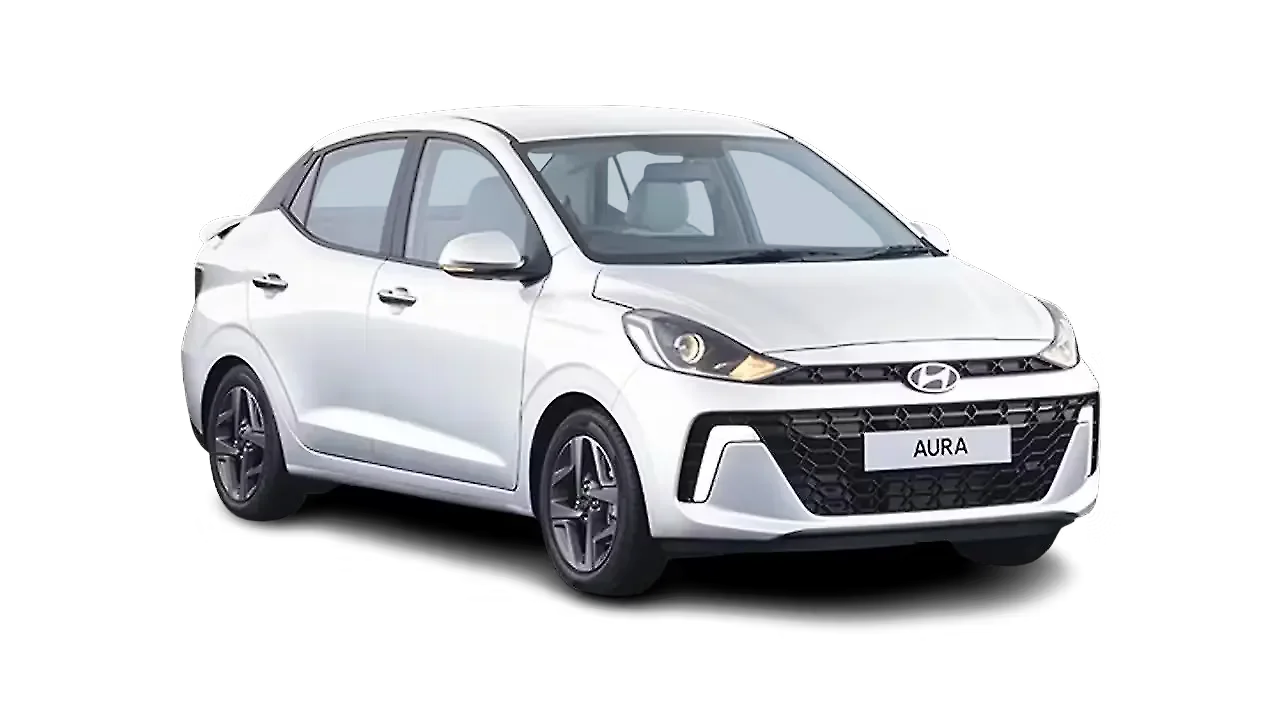
The facelift brings a slimmer grille, a larger split DRL signature that distinguishes it from the Grand i10 Nios, and projector headlamps with projector fog lamps on higher trims. The side profile is unchanged with 15-inch diamond-cut alloys, chrome door handles and request sensors. The rear remains the Aura's most divisive angle, with a busy tail-light design that not every reviewer warms to. Paint quality is a genuine highlight: the finish shines like new after a wash even on a high-mileage example. The 175-section tyres look under-tyred for the stance, and the bumper has been mildly reworked. Overall the Aura now looks sleeker and more premium up front, though the rear could have benefitted from sharper LED treatment given the price bracket.
Inside, the Aura runs a dual-tone dashboard with bronze accents, an 8-inch touchscreen with wireless Android Auto and Apple CarPlay, automatic climate control, wireless charging and a Type-C USB port. The 3.5-inch MID in the new analogue cluster is a clean upgrade, and Arnav Pratap Singh notes the cabin feels practical with sensible storage including a phone slot ahead of the gear lever. Plastics are hard but well-grained and fit is tight, with no rattles reported after 7,500 km. Niggles persist: fuel economy data resets on refill, the trip computer offers no toggle, sun visors leave a gap, only the driver's window gets one-touch down, and rear headrests are fixed. The light fabric upholstery stains easily but cleans without specialist help.
Build is a genuine Hyundai strength here. Panel gaps are consistent, switchgear feels solid, and there are no rattles or loose trims even on a 10,000 km example. The safety package has been meaningfully upgraded: four airbags are now standard, six are optional, and ESP, Hill Start Assist, VSM, ABS with EBD, ISOFIX mounts and TPMS are on the menu. The reverse camera is clear and parking sensors warn in time, though Hyundai's decision to provide only two rear sensors (instead of four) is a cost-cut that has caused real-world scrapes. The IRVM is manual day-night only. Cruise control is a new addition. The 8-inch touchscreen responds well, and the music system is decent though Honda Amaze and Tata Tigor sound better.
The post-facelift Aura is offered only with the 1.2-litre Kappa petrol making 83 PS and 113 Nm, paired to a 5-speed manual or AMT, plus a 1.2 CNG making 69 PS. The old 1.0 turbo and 1.2 diesel are gone. The naturally aspirated petrol is the segment's NVH benchmark: smooth, vibration-free and peppy with one or two occupants, though four-up highway overtakes need planning. The clutch is feather-light, gearshifts slot cleanly, and reverse occasionally needs a double-clutch. The AMT is typical of the breed with noticeable torque drop during upshifts and reluctance to kick down above 1,300-1,500 rpm. Real-world economy sits at 13-14 kmpl in the city and 18-19 kmpl on the highway, with the CNG variant claiming 28 km/kg.
Ride quality is tuned for Indian roads and absorbs broken patches and expansion joints with composure, sitting between the firmer Honda Amaze and plusher Ford Aspire. Gagan Choudhary rates the suspension a clear improvement over the old Xcent. The steering is light at parking speeds and weighs up acceptably on the highway, but it is not the sharpest in the segment; buyers chasing handling will find the Honda or Tata Tigor more engaging. The 175-section tyres limit ultimate grip and the body stays flat enough for everyday driving. Visibility all around is excellent, the turning radius is tight, and the reverse camera feed is clear though it lacks dynamic guidelines. Brakes are progressive, with the bite feeling slightly sharp on a new car.
On-road Mumbai pricing runs Rs 7.4 lakh to Rs 10.2 lakh, which keeps the Aura competitive against the Honda Amaze, Maruti Dzire and Tata Tigor. Hyundai's service network, warranty extendable up to 7 years, and proven resale make the ownership case strong, especially for first-time buyers and senior citizens. The CNG variant with a 65-litre tank plus 37-litre petrol tank is a smart pick for high-running urban users. The headline weaknesses, no turbo or diesel option, only two rear sensors and modest rear space, prevent a louder recommendation. Within Hyundai's own showroom, buyers wanting more car can stretch to the Creta, but as a sub-4-metre sedan that majors on refinement, safety and efficiency, the Aura earns its money.
"After 7,500 km, the petrol is refined and frugal but the two-sensor rear parking setup is a genuine cost-cut that bites."
"The facelift makes a good car better with smarter safety and a sleeker face; styling apart, it is hard to fault."
"Engine is impressively silent at idle and pickup builds nicely past 2,000 rpm; reverse camera quality is a pleasant surprise."
"Halogen projectors do an acceptable job in the city but LED headlamps and fog lamps would have lifted the night experience."
"Feature list is generous for the price, and the CNG variant's claimed 28 km/kg makes it the smart pick for city users."
"At sub-4-metres with 1.6 m width, the Aura looks unusually wide and planted for a compact sedan."